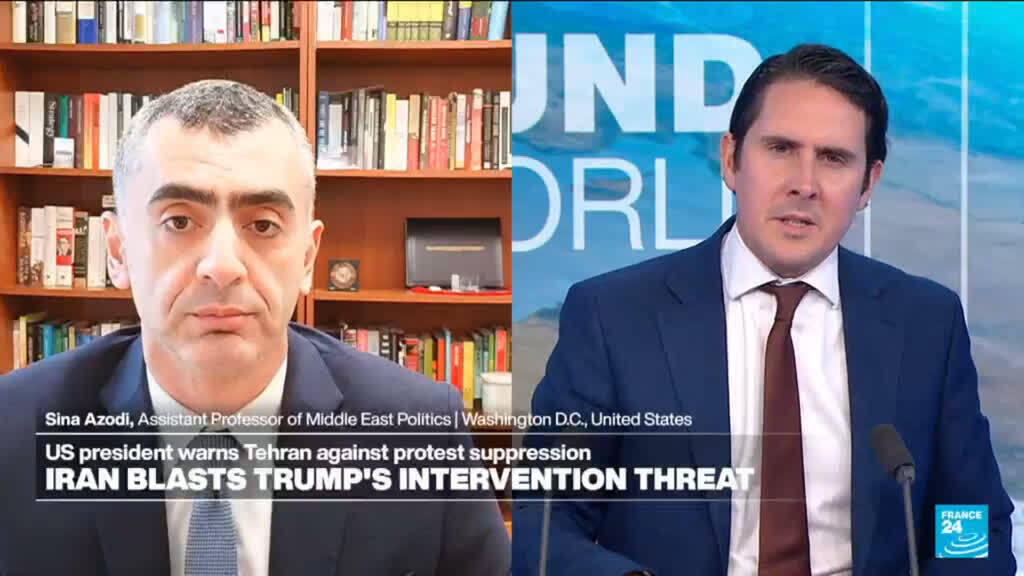

Iran Issues Stark Warnings Amid Rising Tensions with the U.S.
In a significant escalation of rhetoric, Iran's President Masoud Pezeshkian has issued a stern warning regarding potential retaliatory measures against the United States. This statement comes in response to recent threats made by U.S. President Donald Trump, who indicated that the U.S. was "locked and loaded" to respond to any further violence against protesters in Iran. The exchange highlights the ongoing geopolitical tensions between the two nations, exacerbated by internal unrest in Iran.
In a press conference held on December 30, 2025, President Pezeshkian emphasized that Iran would respond harshly to any threats or actions from the U.S. that could endanger its sovereignty. This warning reflects the Iranian leadership's stance on what they deem unlawful threats from outside powers, particularly in light of Trump's comments, which have been interpreted as a direct challenge to Iran's authority amid ongoing domestic protests over economic conditions.
Iran’s UN ambassador, Amir Saeed Iravani, echoed these sentiments, calling upon the United Nations to condemn Trump's remarks. Iravani characterized the U.S. President's words as "unlawful threats," urging the international community to recognize the potential for escalation that such statements could provoke. The ambassador's comments underscore Iran's sensitivity to external criticism and perceived interventions in its internal affairs, particularly amid ongoing protests that have erupted due to rising living costs and inflation.
In a parallel response, Iran's Supreme Leader, Ayatollah Ali Khamenei, has asserted that the nation will not yield to external pressures, reaffirming the need to manage domestic unrest effectively. Khamenei's remarks, made shortly after Trump's threats, serve to bolster the Iranian regime's narrative of resilience against foreign intervention. He warned that those he termed "rioters" must be controlled, indicating that the government would take a firm stance against any civil disturbances.
The backdrop of these tensions is a series of protests that have swept across Iran, driven by economic discontent and dissatisfaction with the government's handling of various crises. The Iranian leadership views these demonstrations as a potential threat to their authority, which has led to a tightening of security measures and a crackdown on dissent.
The current geopolitical climate is further complicated by the broader context of U.S.-Iran relations, which have been fraught with tension since the U.S. withdrawal from the Iran nuclear deal in 2018 and the subsequent imposition of sanctions. The Iranian government has repeatedly criticized U.S. policies as detrimental to its national interests and has sought to portray itself as a victim of external aggression.
As the situation evolves, analysts are closely monitoring the potential for increased hostilities between the U.S. and Iran. The escalation of rhetoric from both sides raises concerns about miscalculations that could lead to military confrontations, particularly given the volatile nature of regional politics in the Middle East.
The international community, particularly through the United Nations, may play a crucial role in mediating these tensions. However, the effectiveness of such interventions remains to be seen, especially given the entrenched positions of both the U.S. and Iranian leadership.
In conclusion, the recent exchanges between Iran and the U.S. reflect a significant moment in their ongoing confrontation, with potential implications for regional stability and global geopolitics. As both nations prepare for possible escalation, the need for diplomatic engagement becomes increasingly urgent to avert further conflict.






