Iran Closes Strait of Hormuz After Fresh US Strikes on Ports and Bases
The United States has conducted multiple waves of strikes on Iranian military targets near the Strait of Hormuz over the past week, hitting more than 300 sites including missile, drone, naval and coastal assets, prompting Iran strikes on US interests across the Gulf region. US Central Command reported strikes on over 300 military targets in three waves, focusing on coastal surveillance, logistics, communications, missile, drone and naval assets, primarily in provinces overlooking the Strait of Hormuz such as Hormozgan, Bushehr and others. [2] [1]
US Strikes Target Iranian Military Sites Near Strait of Hormuz
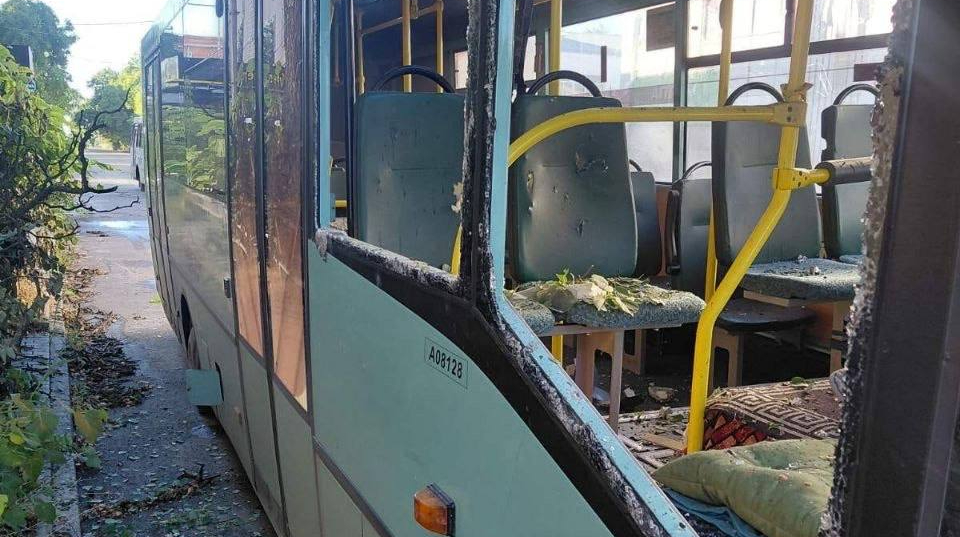
US Central Command said more than 300 military targets were hit during three waves, including coastal surveillance, logistics, communications, as well as missile, drone and naval assets. [1] The US military has been expanding its attacks over the past week. [1] US fighter jets and warships have hit hundreds of military targets and a number of civilian ones in nearly a week of strikes, with Iranian authorities reporting attacks in at least 10 provinces, mainly in southern Iran near the strategically important Strait of Hormuz. [1] As with other flare-ups over recent weeks, numerous attacks were launched on the province of Hormozgan, including the major port city of Bandar Abbas, as well as on Siri, Qeshm and Jask overlooking the strait. [1] Port, fishing, coastal-control infrastructure and air defences were extensively bombed, reportedly killing a soldier and leaving multiple fishermen dead or wounded in separate strikes. [1] US projectiles have also targeted multiple areas in Bushehr province, with one attack impacting the perimeter of Iran’s only nuclear power plant without damaging it. [1] Provincial authorities in the southwestern province of Khuzestan said three areas were hit, but not the capital, Ahvaz. [1] Local authorities in the provinces of Kohgiluyeh, Boyer-Ahmad and Lorestan also reported projectile attacks. [1] In Sistan and Baluchestan to the southeast, attacks were reported in Chabahar, Konarak and Iranshahr, where a strike on airport facilities killed a firefighter. [1] Over the past week, the US military has launched some of its deepest strikes into Iranian territory since full-scale military operations were suspended by the “ceasefire” agreed in April. [1] One of them was in the northern province of Golestan, where the Aq Tekeh Khan railway bridge was struck on the Gorgan-Incheh Borun line. [1] The attack showed that inland corridors could also become targets to increase pressure on Iran by limiting its trade, including imports of essential goods. [1] The transit route connects Iran to Turkmenistan and onwards to Kazakhstan, Russia, China as well as Eurasian rail networks. [1] Last week, when assassinated Supreme Leader Ayatollah Ali Khamenei was being buried in his hometown of Mashhad in northeastern Iran, authorities said the US struck a bridge about 55km from the city, disrupting passenger journeys to the funeral procession. [1] Iranian authorities say electricity infrastructure has also been significantly impacted since the start of the war, worsening the long-running energy crisis. [1]
Iran Closes Strait and Launches Retaliatory Attacks Across Gulf
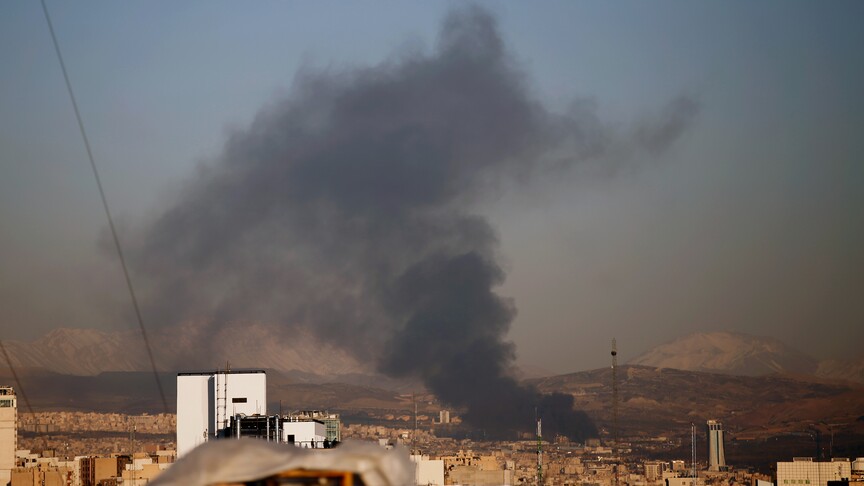
US strikes hit over 300 Iranian military targets near the Strait of Hormuz. — Source: anadolu The IRGC stated the Strait of Hormuz was closed after two vessels using a Western-backed southern route were struck. [1] The Islamic Revolutionary Guard Corps said overnight into Sunday that the Strait of Hormuz was once again considered closed due to US military intervention. [1] Two vessels opting to transit using the Western-backed southern route near Oman, rather than Iran’s designated path to the north of the strait, had been struck, the IRGC added. [1] Iran said it had also attacked US interests across the region, including in Bahrain, Kuwait, Jordan, Qatar and Oman, in response to US strikes. [1] Iran said it closed the strait after firing a warning shot that struck a vessel travelling on an “unauthorised route”. [5] The strait will remain closed until “the end of US interference in this region”, the Revolutionary Guards said. [5] In response, the IRGC said it had destroyed a command-and-control centre and drone hangars in US ally Jordan, targeted a US radar site in Kuwait, attacked US aircraft carrier support and refuelling platforms in Oman, and destroyed a jet maintenance centre and command facility in Qatar. [5] The IRGC warned that further US-Israeli aggression will be met with stronger military responses. [3] Iran later said it had disabled a second vessel. [5] Centcom said its forces were positioned to safeguard freedom of navigation despite what it described as “aggression, harassment, threats, and arbitrary declarations” from Iran. [5]
Civilian and Infrastructure Damage Reported in Multiple Provinces
Iranian authorities reported attacks in at least 10 provinces, including strikes near the Bushehr nuclear power plant perimeter, on a railway bridge in Golestan province, electricity infrastructure reducing generation by 4200 megawatts, and an airport facility in Sistan and Baluchestan that killed a firefighter. [1] The attacks have reduced Iran’s capacity for electricity generation by about 4,200 megawatts, just as summer temperatures reached 40 degrees Celsius this week, Mohammad Allahdad, head of Tavanir, the government-owned parent company for the operation of Iran’s power grid, said on Sunday. [1] Video recorded by a local from Chabahar and shared online showed the destruction of the city’s renowned maritime control tower. [1] Authorities said the bridge, which carries both passengers and cargo, was repaired and services resumed quickly. [1] However, the attack showed that inland corridors could also become targets to increase pressure on Iran by limiting its trade, including imports of essential goods. [1] In Sistan and Baluchestan to the southeast, attacks were reported in Chabahar, Konarak and Iranshahr, where a strike on airport facilities killed a firefighter. [1]
Escalation Follows Fragile US-Iran Understanding
The strikes follow a vague US-Iran memorandum of understanding signed in June and come amid an ongoing aerial campaign that began over four months ago with US and Israeli actions, with new Supreme Leader Mojtaba Khamenei calling for revenge after his father's assassination. [1] The renewed violence casts further doubt on the future of an interim US-Iranian agreement signed on June 18 that aimed to reopen the strait and end the war after a further 60 days of negotiations. [5] In the past week, US President Donald Trump has said he considers the ceasefire over, while leaving the door open to more talks. [5] The war that began with US and Israeli strikes against Iran on February 28 has destabilised the Gulf, while Iran’s effective blockade of the strait has driven energy prices higher, fuelling global inflation. [5] On Tuesday, the US revoked the licence authorising the sale of Iranian crude after Qatari and Saudi commercial tankers came under fire. [5] A day earlier, a written statement from Iran’s new supreme leader, Ayatollah Mojtaba Khamenei, threatened vengeance for the assassination of his predecessor and father in the war’s initial attacks. [5]
Regional Reactions and Statements from New Iranian Leadership
After the conclusion of the funeral ceremonies for Ali Khamenei, a statement from new Supreme Leader Mojtaba Khamenei, who has not been seen public since succeeding his father, emphasised the necessity for revenge. [1] Similar messages continue to be broadcast by state media and hardline religion-backed factions supporting the Islamic Republic, who on Sunday also cheered the death of US Republican Senator Lindsey Graham. [1] State television hailed what it called the “dispatching to hell” of a pro-war hawkish politician. [1] Qatar, which has previously said it would not act as a mediator so long as it was under attack, said three people, including a child, had been injured by falling shrapnel. [5] It said Iran was “fully legally responsible” for the attack. [5] The UAE said it detected missile threats outside its borders, Bahrain said it intercepted several Iranian aerial attacks, Jordan reported missile strikes, and Oman reported being targeted with drones. [5] Oman said it had summoned Iran’s ambassador to protest over drone attacks in two regions and the US embassy in Oman told its nationals in Duqm and Musandam to shelter in place. [5]
Daily Life and Economic Strain in Tehran
In Tehran, life for more than 10 million people has carried on mostly as usual since the capital has not been recently attacked. [1] But the economy is in the doldrums and the outlook is increasingly uncertain, more than four months after the US and Israel began their aerial campaign. [1] “Everything is too chaotic right now to guess what will happen next but it doesn’t look good,” Farshad, a 21-year-old resident of eastern Tehran, said on Sunday. [1] “I just really hope all-out war doesn’t start again because I don’t have the nerve for daily bombing on top of everything else,” he told Al Jazeera. [1] Another Tehran citizen, Nastaran, said the overnight escalation felt more serious than previous attacks. [1] “I didn’t expect it would be this bad when I picked up my phone this morning to check the news,” she said. [1] “I think there will be more attacks soon.” [1] The attacks have reduced Iran’s capacity for electricity generation by about 4,200 megawatts, just as summer temperatures reached 40 degrees Celsius this week. [1]
What to watch next: The latest round of hostilities came after talks in Oman on Saturday between Iran’s Foreign Minister Abbas Araghchi and Omani Foreign Minister Badr Albusaidi, with Araghchi later discussing regional developments in a phone call with Deputy Prime Minister and Foreign Minister Ishaq Dar, who called for parties to de-escalate and show restraint. [5]