
India's Strategic Balancing Act: Navigating New Alliances Amidst Global Tensions
Current Geopolitical Landscape: A Tightrope Walk
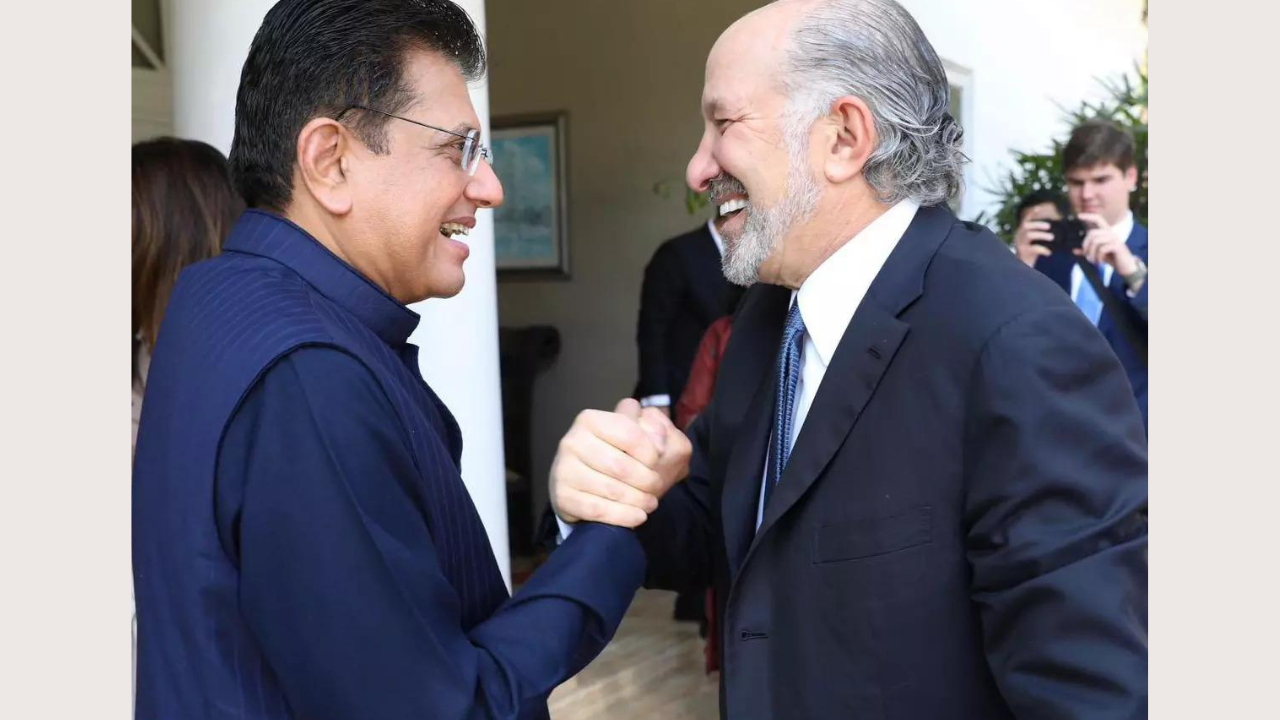
Recent diplomatic developments underscore India's strategic agility. US Commerce Secretary Gina Raimondo's meeting with Indian Commerce Minister Piyush Goyal has left Trump-era tariff threats in limbo, signaling progress on trade as US elections approach. Concurrently, India has upgraded its defense and technology ties with Israel, while Prime Minister Narendra Modi has endorsed a Gaza peace plan, advocating for humanitarian corridors and a two-state solution.
This dual approach reflects India's tightrope walk: deepening Quad partnerships with the US to counter China in the Indo-Pacific, while maintaining a balanced stance in the Middle East. Social media reactions have been vibrant, with former diplomat @MJS_46 tweeting, "India's Israel embrace + Gaza peace push = masterclass in multi-alignment. #StrategicAutonomy," which garnered 12K likes. However, this strategy risks alienating Arab partners, especially in light of the tensions following the October 2023 Hamas attacks.
Historical Context: Lessons from the Past
India's diplomatic playbook is informed by a rich history. On January 2, 2026, External Affairs Minister S. Jaishankar affirmed India's "right to self-defense," supporting Israel's actions while critiquing escalatory violence—echoing today's stance on Gaza. The January 9 Ganges water talks with Bangladesh revived 1996 treaty mechanisms, showcasing India's neighborhood-first policy amid border frictions.
German Chancellor Olaf Scholz's January 11 visit bolstered green energy pacts, while January 14 joint staff talks with Greece expanded India's Mediterranean outreach. By January 16, analyses framed India's "geopolitical challenges" in the region, linking Pakistan border skirmishes and Chinese incursions to these diplomatic moves. The lessons of non-alignment during Cold War proxy wars now inform this era, prioritizing self-reliance (Atmanirbhar Bharat) over traditional bloc politics.
The Role of Regional Mediation: India's Emerging Influence
India is positioning itself as a mediator in the Israel-Palestine conflict, leveraging historical ties with the PLO and increasing Israeli defense imports (over $2B annually). Modi's endorsement of a Gaza peace initiative—coupled with humanitarian aid shipments—mirrors India's mediation efforts in Ukraine, blending moral suasion with pragmatic diplomacy. In Gaza, India's strategy emphasizes de-escalation through UN channels, highlighting the humanitarian toll: over 40,000 Palestinian deaths, according to health ministry figures and UN data.
This influence is rooted in India's soft power—yoga diplomacy, vaccine Maitri—and hard power advancements, such as BrahMos missile deals with Israel. Analyst @ShivshankarM tweeted, "India's Gaza call shows it's no longer just a balancer; it's a bridge-builder. #IndiaRising," which received 8K retweets. Success in this mediation could extend to Indo-Pacific disputes, enhancing India's G20 presidency legacy.
Looking Ahead: What This Means for India
India's diplomatic engagements may solidify US-Israel alliances, unlocking technology transfers and QUAD+ military drills, but they may also heighten frictions with China and Pakistan. Beijing's assertiveness in the South China Sea could provoke naval escalations in the Indian Ocean, while Islamabad might exploit perceived India-Israel ties through proxies. On a positive note, tariff resolutions could boost foreign direct investment (FDI) to over $100B annually, fueling a projected 7% GDP growth.
Conversely, failures in Gaza mediation could lead to Arab backlash, complicating I2U2 (India-Israel-US-UAE) forums. Observers should watch for BRICS summits, where India could propose peace initiatives to avert Indo-Pak flare-ups linked to Kashmir.
Conclusion: India's Strategic Imperative
India's positioning as an ally to the West and a friend to the Global South allows it to navigate tariff wars, Gaza strife, and regional challenges with finesse. This balancing act sustains stability, economic growth, and great-power ambitions. As Jaishankar aptly noted, "Europe has to grow out of the mindset that Europe's problems are the world's problems." For India, the world's problems present opportunities for growth and influence.
(Word count: 612)
This is a developing story.






