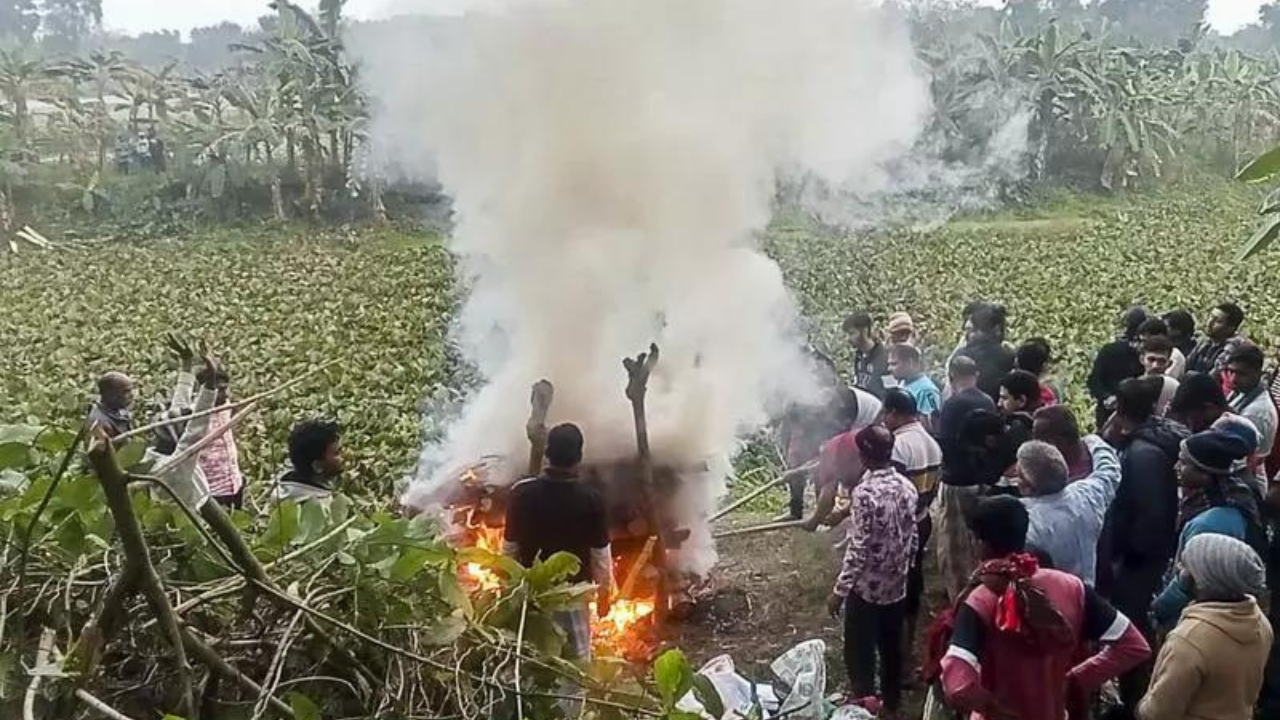

Hindu Journalist Fatally Shot in Bangladesh Despite Paying Protection Money to Assailants
Jessore, Bangladesh – Rana Pratap Bairagi, a Hindu scribe and local leader affiliated with the Awami League, was gunned down in a brazen attack on January 5, 2026, in Bangladesh's Jessore district, highlighting the escalating violence against religious minorities amid claims of extortion and radical Islamist threats.
The 45-year-old victim was reportedly lured out of his factory workplace under false pretenses before being shot seven times at close range, according to family members cited in reports. Despite his regular payments of protection money—totaling 3 lakh taka (approximately $2,500 USD) just weeks prior—Bairagi was unable to escape the targeted assault. The attack has been described by kin as a cold-blooded execution by radical Islamist elements, underscoring the pervasive fear gripping minority communities in the region.
Local accounts detail that Bairagi, who worked as a journalist and community organizer, had been under duress for months, compelled to pay off unidentified extortionists to safeguard his life and business. The Times of India reported that family members confirmed the recent payment, yet it failed to deter his killers. The incident occurred against a backdrop of heightened insecurity for Hindus, who make up about 8% of Bangladesh's 170 million population and have faced a wave of attacks since political upheaval in 2024.
Escalating Attacks on Minorities Post-2024 Uprising
The murder of Bairagi fits into a disturbing pattern of violence targeting Hindu individuals perceived as linked to the ousted Awami League government of former Prime Minister Sheikh Hasina. Hasina's administration, which championed secularism, was toppled in August 2024 following massive student-led protests that led to her flight to India. The subsequent interim government led by Nobel laureate Muhammad Yunus has struggled to curb a surge in communal tensions, with radical groups emboldened by the power vacuum.
Verified reports from international monitors, including the U.S. Commission on International Religious Freedom and Human Rights Watch, have documented over 200 attacks on Hindu temples, homes, and businesses in the months following Hasina's departure. In Jessore and neighboring districts, Hindu enclaves have reported frequent demands for "tolls" or protection fees, enforced by armed mobs often chanting Islamist slogans. Bairagi's case stands out due to the explicit confirmation of extortion payments, which his relatives say were funneled through intermediaries but offered no real security.
Eyewitnesses described the assailants arriving on motorcycles, calling Bairagi outside around 5:53 PM local time on January 5. He was shot in vital areas, including the head, with additional reports indicating his throat was slit post-shooting, amplifying the brutality. No arrests have been announced as of January 7, 2026, and local police have yet to issue an official statement, fueling accusations of inaction or complicity.
Historical Context of Minority Persecution
Bangladesh's Hindu minority has endured cycles of discrimination since the 1971 Liberation War, when the country emerged from Pakistan amid partition-era violence. Under successive governments, Hindus have faced land grabs via the Enemy Property Act (repealed in 2001 but with lingering effects), forced conversions, and mob attacks during political transitions. The Awami League's 2009-2024 tenure provided relative stability, but its portrayal as pro-India and secular alienated Islamist factions like Jamaat-e-Islami.
Post-2024, the interim administration has pledged investigations into minority violence, but implementation has been uneven. India's Ministry of External Affairs raised concerns in late 2024 over the safety of Hindus, many of whom have kin across the border. Refugee inflows into India from Bangladesh spiked, with over 1,000 Hindus reportedly fleeing Jessore alone in recent months.
This latest killing has drawn sharp reactions from diaspora groups and Bangladeshi Hindu organizations, who view it as part of a "genocide by increments." The Bangladesh Hindu Buddhist Christian Unity Council condemned the attack, urging the Yunus government to deploy security forces in vulnerable areas.
Outlook Amid Regional Tensions
As Bangladesh navigates toward elections tentatively slated for late 2026, the protection of minorities remains a litmus test for stability. International partners, including the United Nations and European Union, have called for accountability, with potential aid conditions tied to human rights improvements. The incident risks further straining India-Bangladesh ties, already frayed by border security issues.
For now, families like Bairagi's mourn in silence, their demands for justice echoing a broader cry from communities living under siege. Official data from Bangladesh's interim government reports a 30% rise in communal incidents since August 2024, though independent tallies suggest underreporting. Until perpetrators are prosecuted and extortion rackets dismantled, such high-severity attacks—classified here as terrorism due to their ideological targeting—threaten to deepen divisions in the South Asian nation.
(Word count: 682)






