
Geopolitics in Iran Disrupts Asian Oil Supplies, Sparking Economic Shifts
Iran's ongoing war is jeopardizing Asia's energy security, forcing governments in the region to seek alternatives and leading to downward revisions in economic growth forecasts.[1] The geopolitics in Iran have intensified disruptions to vital oil supplies, with ripple effects felt across Asia's economies as leaders grapple with rising costs and supply uncertainties.[1]
Impact on Asia's Energy Security
Asia stands as the world's top oil-importing region, making it particularly vulnerable to the shocks emanating from the Iran war.[1] The conflict has triggered a severe energy crisis, disrupting traditional import routes and compelling governments to scramble for alternative sources to shield their economies from the fallout.[1] These efforts, however, are proving increasingly costly, as nations divert resources to secure new supplies amid volatile global markets strained by the ongoing hostilities.[1]
The Iran war's direct impact on shipping lanes and production has amplified these challenges, pushing Asian policymakers to rethink long-term energy strategies.[1] Singapore, a key hub in the region, exemplifies the broader scramble, where officials are exploring diversified imports and stockpiling measures to mitigate shortages.[1] This vulnerability underscores Asia's heavy reliance on Middle Eastern oil, with the current crisis forcing rapid adjustments that strain budgets and supply chains.[1] As disruptions persist, the push for alternatives—such as ramped-up imports from other producers or accelerated investments in renewables—highlights the precarious balance between immediate needs and sustainable security.[1] The geopolitical tensions surrounding Iran have thus not only threatened short-term availability but also elevated the economic toll of maintaining energy flows to power-hungry economies across the continent.[1]
Diplomatic Tensions Over Hormuz
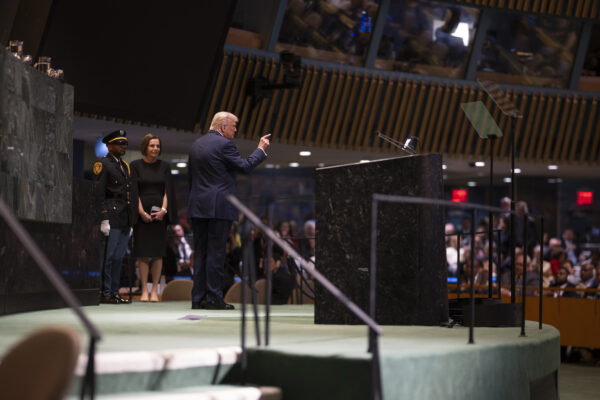
The geopolitics in Iran have heightened diplomatic frictions over the Strait of Hormuz, a critical chokepoint for global oil transit.[2][3] Russia and China recently vetoed a U.S.-backed resolution proposed by Bahrain at the United Nations, a move that effectively blocked what appeared to be a pathway to legitimizing potential U.S. military action against Iran.[2] U.S. Secretary of State Marco Rubio had framed this resolution as a pivotal test for the U.N.'s credibility, urging against such vetoes to underscore the body's role in addressing threats to international navigation.[2]
Compounding these tensions, the United States has paused its military escorts in the Strait of Hormuz as it pursues a diplomatic deal amid persistent Iranian threats.[3] These escorts, known as "Project Freedom" under former President Donald Trump, were halted over the last day and a half following Iranian attacks that jeopardized an already fragile ceasefire.[3] The decision reflects a tactical shift toward negotiation, even as the strait remains a flashpoint where military posturing intersects with efforts to de-escalate.[2][3] This pause comes against a backdrop of heightened risks, where any miscalculation could further constrict oil flows and exacerbate global energy pressures.[3]
Broader Security Challenges
The deepening Middle East crisis, fueled by the U.S.-Israel war on Iran that began in February, has laid bare the structural limitations of global security frameworks.[4] Ceasefires have repeatedly failed, peace talks have stalled, and the Strait of Hormuz continues to face blockade threats, straining institutions like the United Nations and leaving NATO in disarray.[4] U.S. President Donald Trump's threats to withdraw from the transatlantic alliance have further rattled NATO, amplifying concerns over the reliability of these bodies in managing protracted conflicts.[4]
In response, discussions are emerging around an Asian alternative to NATO, centered on organizations like the Conference on Interaction and Confidence-Building Measures in Asia (CICA).[4] This grouping, which includes member states from across the region, is rethinking Middle East security dynamics as the risks of a drawn-out war loom larger.[4] The crisis has prompted a reevaluation of how Asian-led initiatives might fill gaps left by faltering Western-dominated structures, fostering confidence-building in a volatile landscape.[4] With global frameworks under pressure, CICA's role signals a potential shift toward regionally tailored approaches to safeguard shared interests amid the Iran conflict.[4]
U.S. Warnings and Regional Pressures
U.S. officials have issued pointed warnings amid the broader geopolitical strains linked to Iran, extending pressures to other flashpoints.[5] Secretary of State Marco Rubio cautioned against any "destabilizing" actions on Taiwan ahead of President Donald Trump's upcoming trip to China, the first of his second term.[5] Rubio also urged Beijing to increase pressure on Iran, tying the Middle East crisis to East Asian dynamics.[5]
Trump's visit, originally scheduled earlier, was delayed following his leadership in a joint U.S.-Israel attack against Iran.[5] Addressing reporters at the White House, Rubio expressed confidence that Trump and Chinese President Xi Jinping would discuss these interconnected issues during the trip next week.[5] This linkage highlights how the Iran conflict reverberates across regions, with U.S. diplomacy seeking to leverage alliances to contain risks from Hormuz to the Taiwan Strait.[5] Rubio's statements underscore the multifaceted pressures on global stability, where Iran's actions prompt coordinated responses involving major powers.[5]
Economic Forecasts and Responses
The energy crisis stemming from the Iran war has prompted significant revisions in economic outlooks for Asia.[1] The Asian Development Bank (ADB) has slashed its growth forecast for developing Asia and the Pacific to 4.7 percent for this year and 4.8 percent in 2027, a downward adjustment from the previous projection of 5.1 percent for both years.[1] Concurrently, the ADB has raised its inflation outlook to 5.2 percent for the current year, reflecting the upward pressure on prices from disrupted supplies.[1]
These changes capture the tangible economic drag of the conflict, as higher energy costs filter through to consumers and industries.[1] Asian governments' scramble for alternatives has intensified this pain, with insulation measures adding to fiscal burdens.[1] The ADB's updated projections serve as a stark indicator of how the Iran war's disruptions are reshaping growth trajectories, compelling policymakers to balance stimulus with supply-side fixes.[1] As inflation climbs, central banks in the region face tougher choices, potentially tightening policies that could further moderate expansion.[1]
What to watch next: Trump's delayed trip to China next week, where discussions with Xi Jinping on Iran pressures and Taiwan stability could influence diplomatic paths forward,[5] alongside any resumption of U.S. escorts in Hormuz amid ongoing threats.[3]