
France Emerges as Geopolitical Flashpoint Amid Syrian-Israeli Talks and Macron's US Critique
Paris, France – In a week marked by high-stakes diplomacy, France has found itself at the epicenter of international tensions. A Syrian delegation's meeting with Israeli officials in the French capital on January 5 has sparked concerns over potential sovereignty violations, while President Emmanuel Macron used his annual address to French ambassadors on January 9 to deliver a stark warning about the United States' shifting reliability as an ally.
The unprecedented Syrian-Israeli encounter in Paris, which began around 12:39 UTC on January 5, represents a rare direct interaction between the two long-standing adversaries. According to reports, the discussions raised immediate alarms regarding breaches of Syrian sovereignty, highlighting the fragility of Middle East peace efforts. Neither Syria nor Israel has formal diplomatic relations, with their conflict rooted in decades of hostility, including Israel's occupation of the Golan Heights since 1967 and repeated military engagements. Hosting the meeting in Paris underscores France's role as a neutral mediator in regional disputes, though details of the agenda remain closely guarded. Syrian officials have expressed unease, framing the talks as potentially infringing on national boundaries and territorial integrity, amid ongoing instability following the fall of the Assad regime in late 2024 and the subsequent transitional government's efforts to stabilize the country.
This development coincides with broader geopolitical turbulence, as evidenced by President Macron's pointed remarks during his traditional New Year address to France's diplomatic corps. Broadcast and analyzed on France24, Macron cautioned that the United States is "gradually turning away" from some of its traditional allies and "breaking free from international rules." He specifically referenced the recent U.S. capture of Venezuelan President Nicolás Maduro – a dramatic operation attributed to the incoming Trump administration – and renewed American interest in acquiring Greenland from Denmark, echoing former President Donald Trump's 2019 proposal. These actions, Macron argued, signal a U.S. retreat from multilateral commitments, prompting Europe to reassess its security and trade dependencies.
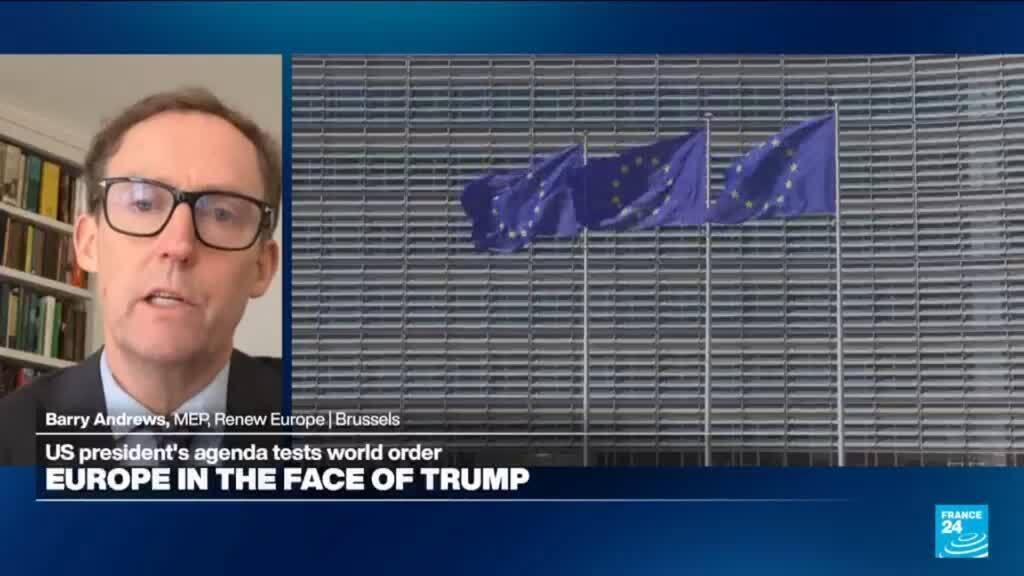
Irish MEP Barry Andrews, appearing on France24 for in-depth analysis, elaborated on the implications. "Mr. Andrews breaks down the volatile geopolitical landscape sparked by Trump's fiery rhetoric with traditional allies," the network summarized, noting the broader erosion of transatlantic trust. Andrews, a member of the Renew Europe group in the European Parliament, emphasized the need for the EU to bolster its strategic autonomy in defense, particularly as U.S. policies under Trump prioritize unilateralism. This perspective aligns with ongoing European debates, including France's push for a more independent European defense framework, as seen in the revived push for a European army amid Russia's war in Ukraine and tensions in the Indo-Pacific.
Historical Context and Broader Implications
France's positioning in these events is not coincidental. As a permanent member of the UN Security Council and a key player in the Middle East – evidenced by its historical ties to Lebanon and Syria – Paris has long facilitated discreet talks. The Syrian-Israeli meeting evokes memories of past French-hosted initiatives, such as the 1991 Madrid Conference that launched the Middle East peace process. However, the medium-severity rating of the Paris talks, coupled with sovereignty concerns, risks escalating if perceived as bypassing established channels like the UN or Arab League frameworks.
Macron's speech, delivered amid France's diplomatic corps gathering, reflects a strategic pivot. Europe has grappled with U.S. reliability since the 2022 Ukraine invasion, when NATO's Article 5 commitments were tested. The hypothetical U.S. seizure of Maduro – following Venezuela's contested 2024 elections and U.S. sanctions – and Greenland ambitions amplify fears of American exceptionalism overriding international law. Greenland, an autonomous Danish territory rich in rare earth minerals, remains a flashpoint for Arctic resource competition amid climate change.
These incidents underscore France's dual role: mediator in the Middle East and vanguard of European sovereignty against perceived U.S. disengagement. Analysts note that Macron's rhetoric aims to rally EU unity, especially with Germany's upcoming elections and Italy's rightward shift influencing defense spending debates.
Outlook for French Diplomacy
As France navigates these currents, the outcomes remain uncertain. The Syrian-Israeli dialogue could pave the way for de-escalation in the Golan or ignite further proxy conflicts involving Iran-backed groups. Meanwhile, Macron's call for EU self-reliance may accelerate initiatives like the European Defence Fund, projected to reach €8 billion by 2027.
With global alliances in flux, Paris's actions this week signal Europe's intent to assert influence independently. Observers will watch for follow-up statements from Damascus, Jerusalem, and Washington, as these events reshape the post-2024 geopolitical order.
(Word count: 612)