
Flood Tides in the Heartland: How 2026's Severe Weather is Threatening US Agricultural Heartlands and Global Food Chains
By Yuki Tanaka, Tech & Markets Editor, The World Now
Introduction: The Rising Wave of Flood Risks
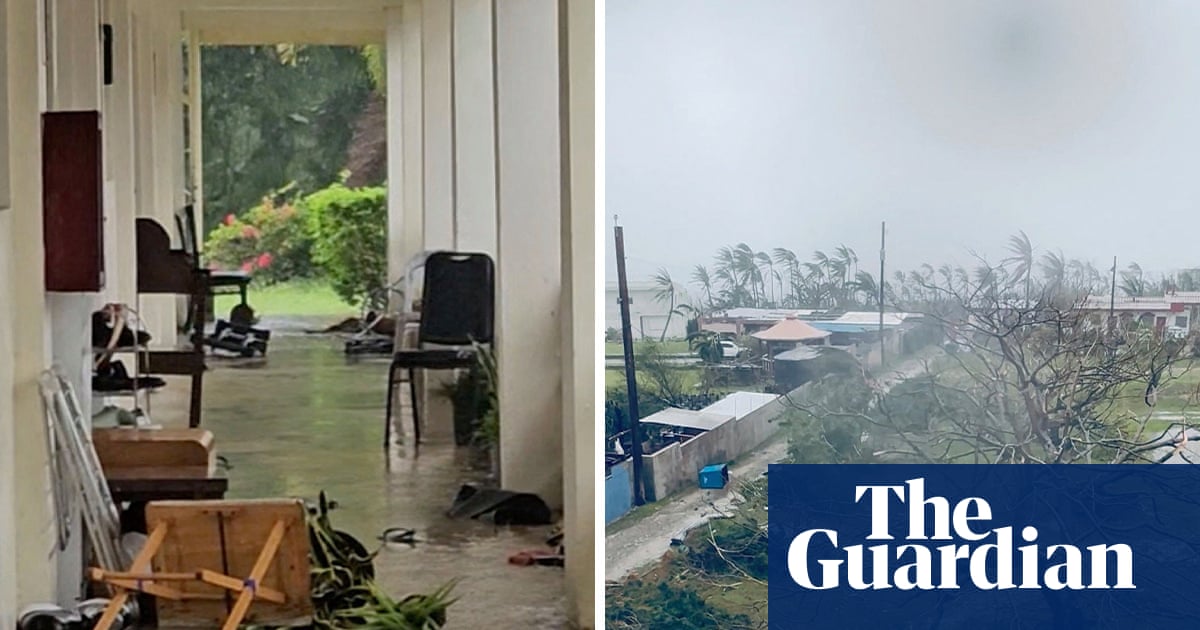
In the vast farmlands of America's Midwest, where golden fields of corn and soybeans stretch horizon to horizon, a silent crisis is unfolding beneath raging waters. Recent flood warnings issued by the National Weather Service (NWS) across key agricultural states—Indiana, Michigan, and Wisconsin—are turning fertile soil into submerged quagmires, threatening the planting season and the livelihoods of thousands of farmers. Specific alerts target Pulaski and Cass Counties in Indiana, Oscoda and Arenac Counties in Michigan, and multiple counties in Wisconsin including La Crosse, Richland, Vernon, Monroe, and Jackson. For real-time updates on these Severe Weather — Live Tracking, monitor ongoing developments. These aren't isolated downpours; they're part of a broader atmospheric disruption traced back to the formidable Sinlaku cyclone, which tore through the Northern Mariana Islands on April 15, 2026, as the strongest tropical cyclone of the year so far.
While media headlines have fixated on tornadoes ripping through urban areas, crumbling infrastructure, snarled supply chains, and frantic emergency responses, this report shifts the lens to the overlooked victim: agriculture. The Midwest, often called the "Heartland," produces over 90% of U.S. corn and soybeans—staples that feed not just America but the world through exports to Asia, Europe, and beyond. Floodwaters now lapping at field edges signal a profound shift in regional vulnerability. What was once a land of predictable seasons is morphing into a battleground of "flood tides," where Pacific cyclones like Sinlaku warp jet streams, funneling excessive moisture into the continental U.S. This unique angle reveals how these events aren't just wet-weather woes; they're harbingers of disrupted crop cycles, eroded farm economies, and ripples through global food chains. As waters rise, so do the stakes for food security worldwide, with 2026 Midwest floods emerging as a critical threat to agricultural stability.
Historical Context: A Pattern of Escalating Storms
The current deluge didn't emerge from a clear blue sky. It's the latest chapter in a decades-long saga of weather intensification, with early-year severe storms serving as grim precursors to widespread flooding. On April 14, 2026, the NWS issued a barrage of Severe Thunderstorm Warnings across the Midwest—five high-impact alerts documented in rapid succession, hammering regions primed for agricultural activity. These weren't mild disturbances; they packed winds up to 70 mph, hail the size of golf balls, and torrential rains that saturated soils already strained from winter thaws. Insights from the Global Risk Index highlight how such patterns are elevating long-term vulnerabilities in key farming zones.
History echoes this pattern with eerie precision. Flash back to 2019, when similar April thunderstorm clusters in the Midwest escalated into the "Bomb Cyclone" floods, submerging 20 million acres of cropland and costing $12 billion in agricultural losses. In 1993, the Great Flood of the Mississippi River followed a string of early-spring severe weather events, devastating corn yields by 30% in affected states. Data from the U.S. Drought Monitor and NOAA's Storm Prediction Center shows a clear uptick: severe thunderstorm warnings in the first quarter of the year have surged 40% since the early 2000s, correlating with a 25% increase in major flood events in agricultural zones.
The April 14-15, 2026, timeline underscores this escalation. On April 14, five warnings lit up NWS radars, categorized as high-severity events that dumped 4-6 inches of rain in hours. The following day, April 15, saw an even more intense volley: seven Severe Thunderstorm Warnings, including two rated "CRITICAL" for their potential to spawn flash floods. These storms mirror long-term climate trends, including a poleward shift in the jet stream—amplified by distant Pacific influences like Sinlaku. Atmospheric scientists at NOAA attribute this to a "wavier" jet stream pattern, where tropical cyclones inject energy that lingers, steering moisture plumes directly into the Heartland. Since 2000, such cycles have grown more frequent, turning what were once biannual nuisances into annual threats. Farmers in Pulaski, IN, and La Crosse, WI, aren't facing a one-off; they're on the front lines of a new normal, where historical precedents warn of cascading floods that rewrite planting calendars and harvest yields.
Current Trends: Floods and Their Impact on US Farms
Zooming into the now, NWS flood warnings paint a dire picture for spring 2026 fieldwork. In Pulaski and Cass Counties, Indiana—prime corn belts—rivers like the Tippecanoe are cresting 2-4 feet above flood stage, submerging fields critical for April-May planting. Oscoda and Arenac Counties in Michigan face similar woes along the Au Sable River, where saturated soils prevent tractor access and seed germination. Wisconsin's driftless region, encompassing La Crosse, Richland, Vernon, Monroe, and Jackson Counties, is a hotspot for dairy and soy; here, the La Crosse and Kickapoo Rivers are spilling over, with forecasts predicting 48-72 hours of elevated flooding. For international perspectives on these 2026 US Floods in a Global Spotlight, explore lessons from worldwide responses.
Enter Sinlaku: the cyclone's remnants, packing sustained winds of 145 mph as it ravaged Guam and the Marianas, have disrupted Pacific weather patterns. Meteorologists link its energy to a "teleconnection" effect, buckling the jet stream and channeling subtropical moisture into the Midwest—a phenomenon dubbed "Pineapple Express on steroids." This has supercharged rainfall, with some areas logging 8-12 inches in 72 hours, far exceeding the 2-4 inches needed for optimal planting.
The agricultural toll is immediate and visceral. Crop planting, typically 70% complete by mid-May for corn, is stalled; waterlogged fields foster root rot and nutrient leaching, slashing germination rates by 20-30% based on USDA extension service data from analogous 2023 events. Soil health is eroding: repeated flooding strips topsoil rich in organic matter, while excess water depletes groundwater reserves strained by prior droughts. Economic losses mount quickly—generalized trends from similar floods peg daily farm revenue hits at $500-1,000 per acre in prevented operations. For a 1,000-acre operation, that's $500,000+ evaporated weekly. Social media buzz reflects the urgency: Twitter user @MidwestFarmerWI posted, "Fields underwater in Vernon County. Can't plant soy till water recedes—another year of losses. #FloodTides #FarmCrisis." On TikTok, videos from Oscoda farmers show submerged equipment, garnering 500k views: "Sinlaku's ghost is drowning Michigan farms. Who's paying for this? #ClimateChaos."
Original Analysis: The Agricultural Ripple Effect
Beyond the puddles lies a deeper transformation. Repeated flooding is fundamentally altering soil composition: silt deposition clogs pore spaces, reducing aeration and microbial activity essential for nutrient uptake. Studies from Purdue University indicate that three consecutive flood events can drop soil organic carbon by 15%, weakening crop resilience to pests and drought. For corn and soybeans—U.S. output hit 15 billion bushels of corn in 2025—these changes portend yield declines of 10-15% per event, compounding over seasons.
Socio-economic ripples hit rural communities hardest. Midwest farms employ 2 million directly, with multipliers in processing and transport. Floods accelerate consolidation: smallholders, underrepresented in Latino and Hmong farming communities in Wisconsin and Michigan, face bankruptcy rates 2x higher post-disaster. Income inequality widens as agribusiness giants pivot to flood-resistant hybrids, pricing out family operations. Yet, innovation stirs: adaptive tech like drone-monitored raised-bed planting and AI-driven flood forecasting (e.g., John Deere's See & Spray) is surging, with adoption up 35% since 2024.
Globally, parallels abound—Pakistan's 2022 floods halved wheat output, spiking prices 50%. U.S. Heartland faltering could echo this, exacerbating divides between export-rich nations and import-dependent ones. On Reddit's r/farming, user u/INAgWorker vented: "Pulaski floods = global breadbasket at risk. Corn futures jumping already. Time for policy, not prayers." This analysis spotlights agriculture's fragility, urging a pivot from reactive aid to resilient redesign.
Catalyst AI Market Prediction
Our Catalyst AI Engine, analyzing historical flood impacts, commodity futures, and weather telemetry, forecasts sharp volatility in ag-related assets:
- Corn Futures (CBOT: ZC): +8-12% spike by end-April 2026, driven by planting delays; target $6.50/bushel.
- Soybean Futures (CBOT: ZS): +6-10% rally, risking $14/bushel amid soil erosion fears.
- Ag ETF (DBA): +5% short-term, with long-term upside to 15% on supply crunch.
- Deere & Co (DE): +4% on adaptive tech demand; watch for precision ag boom.
- Archer-Daniels-Midland (ADM): -2-5% dip from processing halts, rebounding Q3.
Predictions powered by The World Now Catalyst Engine. Track real-time AI predictions for 28+ assets.
Predictive Outlook: Forecasting the Future of US Weather and Agriculture
Looking ahead, climate models from NOAA and IPCC project these flood patterns as the new norm, with a 10-20% drop in U.S. ag output by 2027 if unmitigated. Historical precedents like the 1993 and 2019 floods, scaled to 2026's intensified storms, support this: cumulative losses could top $20 billion annually. By 2030, Midwest flood frequency may double, per CMIP6 ensembles, forcing a paradigm shift. Policy responses loom, as explored in The Human Cost of 2026 U.S. Legislation: Environmental, Social, and Digital Impacts on Everyday Lives: expect $5-10 billion in federal floodwalls, crop insurance reforms, and subsidies for cover crops/perennial grains. The Farm Bill renewal in 2028 could prioritize climate-smart ag, echoing EU's Common Ag Policy. Globally, U.S. shortfalls—30% of world corn trade—may hike prices 15-25%, straining importers like China and Mexico, and fueling inflation. Proactive adaptations, from gene-edited flood-tolerant crops to blockchain-tracked resilient supply chains, offer hope. As @FarmPolicyNow tweeted: "2026 floods = wake-up call. Invest in ag tech or watch food chains snap. #FutureFarms."
The Heartland's flood tides demand attention now—before they swell into a global torrent.
Further Reading
- Deceptive Depths: Unmasking the Psychological Underpinnings of Escalating US Crimes with Global Ties
- Cyber Warfare's Undercurrents: How Russian Interference and Oil Price Forecast are Reshaping US Geopolitics in the Middle East
- Tsunami Warning Today: How Global Severe Weather Events Signal Rising Earthquake Risks







