
Escalation of Conflict in Yemen: Saudi Forces Advance Amid Tensions with UAE
As the conflict in Yemen intensifies, Saudi Arabia has disclosed details of its ongoing bombing campaign in the country, coinciding with rising tensions between Saudi Arabia and the United Arab Emirates (UAE). This escalation comes as the UAE prepares to withdraw its military forces from Yemen, further complicating an already volatile situation.
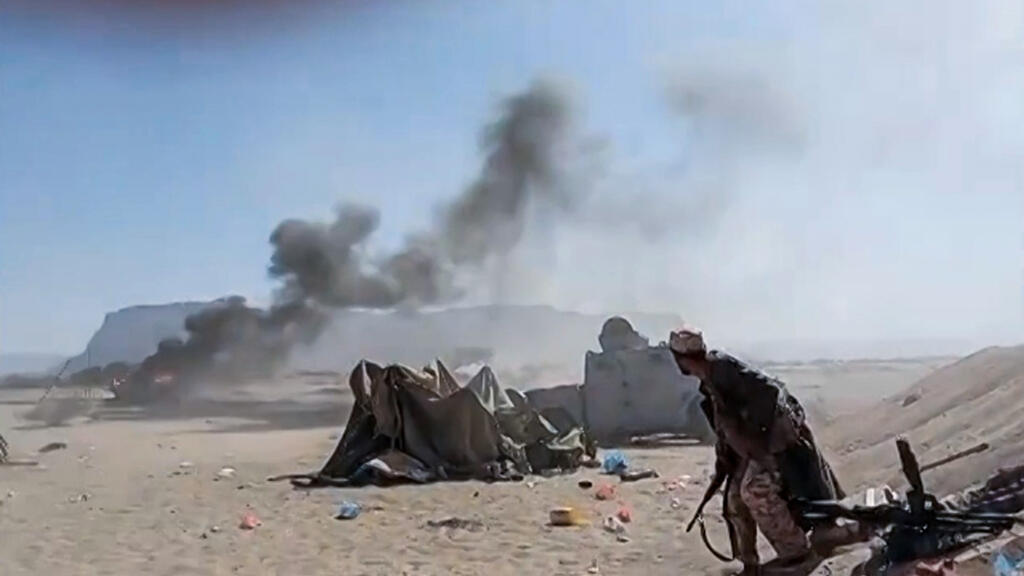
On January 3, 2026, military officials reported that Saudi-backed troops had made significant advances in Yemen's strategically important Hadramawt province. This development has heightened confrontations between forces supported by Riyadh and those backed by Abu Dhabi, deepening the rift between the two Gulf allies who have fought alongside each other since the onset of the Yemeni conflict in 2015. The recent military actions underscore the fragility of alliances in the region and raise concerns over the prospect of increased violence.
Saudi Arabia's bombing campaign has focused on areas held by Houthi rebels, who have been in control of significant portions of Yemen since 2014. The Saudi military's operations are part of a broader strategy to regain territory and support the internationally recognized government of President Abdrabbuh Mansur Hadi. However, the situation has become more complicated with the UAE's shift in strategy, which includes plans to pull back its forces under the pretext of consolidating its military presence.
Accusations of support for separatists have flown between Saudi Arabia and the UAE, which has historically aligned with the Southern Transitional Council (STC), a group advocating for greater autonomy in southern Yemen. The STC has been at odds with Riyadh's approach to restoring the Hadi government, leading to increasing tensions between the two Gulf states. The internal divisions within Yemen's anti-Houthi coalition could jeopardize efforts to stabilize the country and end years of devastating conflict.
Yemen has been embroiled in a humanitarian crisis, exacerbated by the ongoing war, which has led to widespread famine and health crises. The UN has reported that millions of Yemenis are in dire need of assistance, and the potential escalation of hostilities poses further risks to civilians caught in the crossfire.
The dynamics in Yemen are further complicated by regional geopolitics. The UAE's military withdrawal signals a potential shift in its foreign policy priorities, which may embolden Houthi forces and complicate Saudi Arabia's military objectives. As both nations navigate their interests, the ramifications of their actions could have long-lasting effects on the stability of Yemen and the broader region.
The situation remains fluid, and analysts are closely monitoring developments as they unfold. The international community continues to call for a ceasefire and renewed peace talks, recognizing that a military solution is unlikely to bring about a lasting resolution to the conflict. As Yemen faces the potential for renewed violence, the hope for peace remains fragile amid the ongoing power struggles and shifting alliances.
In conclusion, the recent escalation in Yemen highlights the complexities of the conflict and the precarious nature of alliances in the region. With both Saudi Arabia and the UAE reassessing their military strategies, the path to peace seems increasingly uncertain as the humanitarian crisis deepens and the threat of further violence looms.






