
China's PLA Conducts Live-Fire Drills Around Taiwan Amid Escalating Tensions
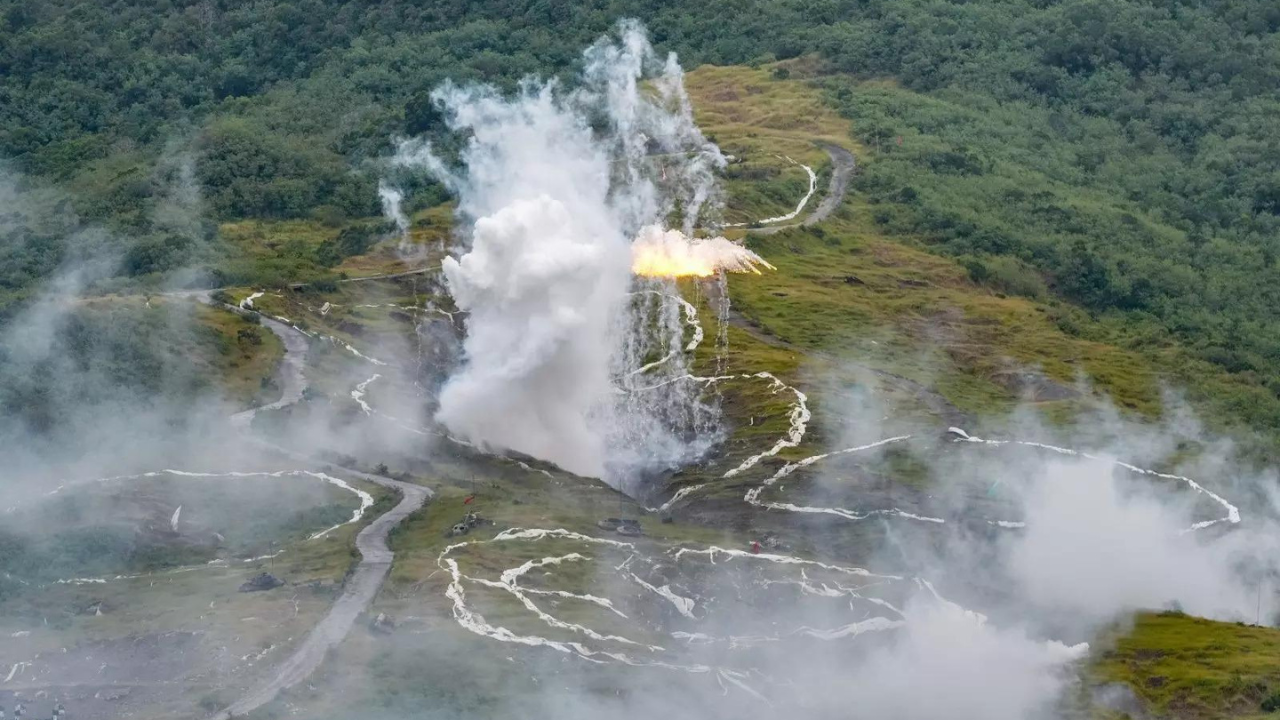
Taipei/Taiwan Strait — China's People's Liberation Army (PLA) has initiated live-fire exercises encircling Taiwan, with the island's defense ministry reporting the detection of eight sorties by Chinese military aircraft and seven naval vessels operating around its territory as of January 6, 2026. The drills, which began on December 31, 2025, come in the wake of a recent U.S. approval of a weapons package for Taiwan, underscoring persistent geopolitical frictions in the Taiwan Strait.
Taiwan's Ministry of National Defense confirmed the incursions in a statement, noting the PLA aircraft and vessels were tracked in areas north, southwest, and southeast of the main island, as well as near outlying islands such as the Pratas Islands in the South China Sea. These activities represent a medium-level escalation in military posturing, with the live-fire component suggesting drills focused on naval and air operations in the region. Taiwan responded by deploying its own air and naval assets to monitor the situation and safeguard territorial integrity, in line with standard operating procedures during such events.
The timing of the exercises aligns closely with Washington's notification to Congress of a new arms sales package to Taiwan, which includes advanced weaponry aimed at bolstering the island's defensive capabilities. Such U.S. support has long been a flashpoint, as Beijing views arms transfers to Taiwan as interference in its sovereign affairs. China claims Taiwan as an inseparable part of its territory under the "One China" principle and has repeatedly warned against foreign military aid to the self-governing island.
Ongoing Pattern of Military Activity
This latest round of PLA activity fits into a broader pattern of intensified military drills around Taiwan. Since 2022, China has conducted large-scale exercises multiple times, often in response to perceived provocations such as high-profile visits by U.S. officials or statements from Taiwanese leaders affirming the island's distinct identity. Notable precedents include the unprecedented "Joint Sword" exercises following U.S. House Speaker Nancy Pelosi's visit to Taipei in August 2022, and similar operations after Taiwanese President Lai Ching-te's inauguration in May 2024.
The December 31 drills mark a continuation of this trend into late 2025 and early 2026. According to Taiwan's defense reports, the PLA has maintained a high operational tempo, with daily detections of aircraft crossing the Taiwan Strait median line—a de facto boundary historically respected by both sides—averaging dozens of incursions per week. The inclusion of live-fire elements in these exercises is particularly noteworthy, as they simulate real-world combat scenarios and test coordination between air, naval, and potentially missile forces.
Taiwan's military has emphasized that its forces remain on high alert, conducting counter-drills and leveraging intelligence-sharing partnerships, primarily with the United States and Japan. The U.S. Indo-Pacific Command routinely monitors PLA activities in the region, issuing statements reaffirming commitment to freedom of navigation and regional stability without directly commenting on specific arms sales.
Historical Context and Strategic Implications
The Taiwan Strait has been a hotspot of geopolitical tension since the Chinese Civil War ended in 1949, when Nationalist forces retreated to Taiwan, establishing the Republic of China government. Beijing has never renounced the use of force to achieve "reunification," while Taiwan has evolved into a vibrant democracy with a population of over 23 million that overwhelmingly rejects unification under the Chinese Communist Party's rule.
U.S. policy toward Taiwan is guided by the 1979 Taiwan Relations Act, which mandates the provision of defensive arms and maintains "strategic ambiguity" regarding direct intervention in a potential conflict. Over the past decade, U.S. arms sales to Taiwan have totaled more than $20 billion, including systems like Patriot missiles, Harpoon anti-ship missiles, and HIMARS rocket artillery. The latest package, approved in late 2025, continues this trajectory amid growing concerns over China's military modernization.
From China's perspective, these drills serve multiple purposes: signaling resolve to Taiwan and its allies, honing blockade and invasion tactics, and deterring independence movements. Analysts note that exercises like these also probe Taiwan's air defense networks, though official reports do not confirm any depletion strategies in the current operation.
Internationally, the European Union, Japan, and Australia have expressed concerns over rising tensions, calling for restraint and dialogue. The Association of Southeast Asian Nations (ASEAN) has advocated de-escalation to protect vital sea lanes, through which over half of global container shipping passes.
Outlook for Stability
As the PLA drills persist into early 2026, Taiwan has urged the international community to recognize the threat to regional peace. No immediate reports indicate escalation beyond the monitored aircraft and vessel movements, but the situation remains fluid. Both sides continue to engage in military signaling, with Taiwan planning to increase its defense budget to 3% of GDP and procure additional asymmetric capabilities.
The international community watches closely, as any miscalculation in the Taiwan Strait could have profound global repercussions, disrupting supply chains and drawing in major powers. Diplomatic channels, including hotlines between U.S. and Chinese militaries established in 2023, aim to prevent unintended confrontations.
(Word count: 712)






