
China's Military Purge: A Strategic Shift Amidst Geopolitical Turbulence
Overview of the Military Purge
In a significant move signaling deep internal upheaval, Chinese President Xi Jinping has intensified a sweeping purge of top military leaders, coinciding with the abrupt cancellation of key rocket launches. This development unfolds amid escalating tensions over Taiwan and technological rivalries, raising profound questions about China's military readiness and its ripple effects on global alliances from the Indo-Pacific to North America.
The Military Purge: Implications for China's Global Standing
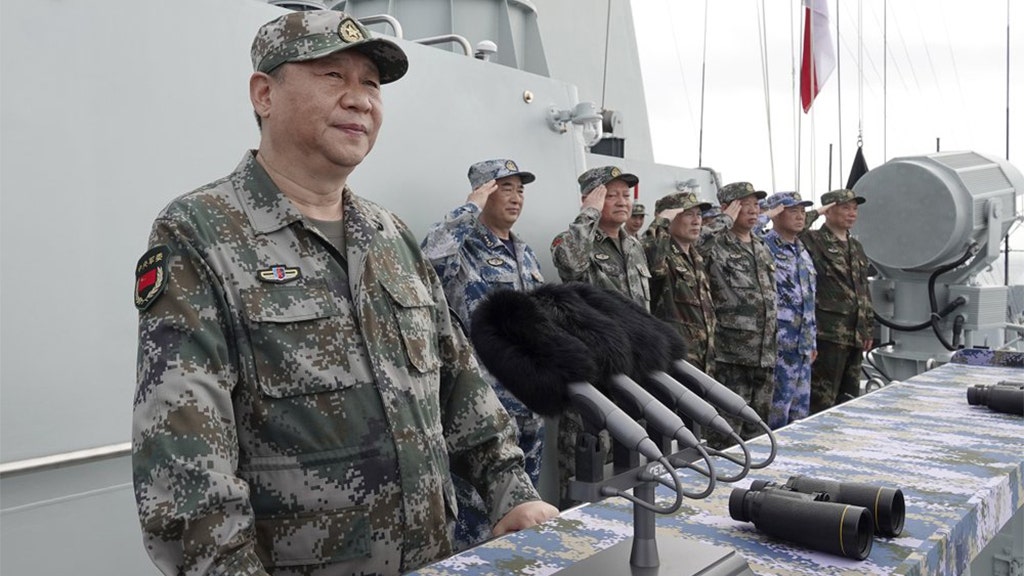
Confirmed reports detail the removal of several high-ranking People's Liberation Army (PLA) officials, including Rocket Force commanders, amid allegations of corruption and disloyalty. Experts cited in Fox News warn that this purge—Xi's most aggressive since 2023—stems from concerns over graft undermining combat effectiveness. While unconfirmed specifics swirl about espionage ties, the scale suggests a strategic recalibration to ensure loyalty ahead of potential conflicts.
Internationally, reactions are muted but wary. U.S. officials have noted that it privately bolsters deterrence, as indicated by social media chatter from analysts like @GordonChang on X: "Xi's purge exposes PLA rot—good for Taiwan, bad for Beijing's bluff." Japan and Australia express quiet concern over instability, potentially straining China's diplomatic overtures, such as its recent Canada minerals deal dismissed as non-targeted at U.S. tariffs. This could erode trust in alliances like AUKUS, humanizing the stakes: thousands of PLA families face uncertainty, while global partners reassess Beijing's reliability.
Historical Context: Lessons from the Past
This purge echoes Mao-era cleansings and Xi's 2015-2017 anti-corruption drive, which sidelined over 100 generals but exposed modernization gaps. Recent timeline events amplify the pattern: On 12/31/2025, China wrapped Taiwan maneuvers simulating blockades, followed by a 1/1/2026 U.S. TSMC chip tool license—easing tech sanctions but heightening suspicions. Taiwan President Lee's 1/2/2026 Beijing summit and Shanghai's 1/7/2026 $10B tech investment underscore a dual-track strategy: coercion abroad, innovation at home. China's same-day ban on military exports to Japan revives 1930s pre-war frictions, shifting dynamics toward encirclement tactics that previously destabilized the region.
The Space Program: A New Frontier of Tension
The SCMP reports the cancellation of Long March rocket tests after failures, stalling the Long March-10A critical for moon missions and satellite constellations. Confirmed: at least two launches scrubbed; unconfirmed if sabotage or technical woes. This hampers China's 2030 lunar base ambitions, vital for military dual-use tech like hypersonic tracking. In the U.S.-China rivalry, it cedes ground to SpaceX and India's gains, potentially delaying anti-satellite capabilities. For scientists and engineers—often young recruits—the setbacks humanize a program blending prestige with power projection.
Looking Ahead: Predicting China's Next Moves
Post-purge, expect a pivot to tech-driven dominance: AI drones, cyber units, and hypersonics over manpower purges. Regional risks rise—Taiwan Strait patrols may intensify by Q2 2026, testing U.S. commitments, while Japan faces export-ban fallout. International pushback, like Trump's tariff echoes, could force diplomatic resets, per @BonnieGlaserX: "Purge = window of PLA weakness; allies must seize it." Yet, stabilized leadership might embolden gray-zone tactics near Philippines reefs.
What This Means
Leadership promotions by March 2026; Long March-10A retry; Taiwan election rhetoric. A tech-focused PLA signals an enduring threat to alliances, not a retreat.
This is a developing story and will be updated as more information becomes available.
(Word count: 606)