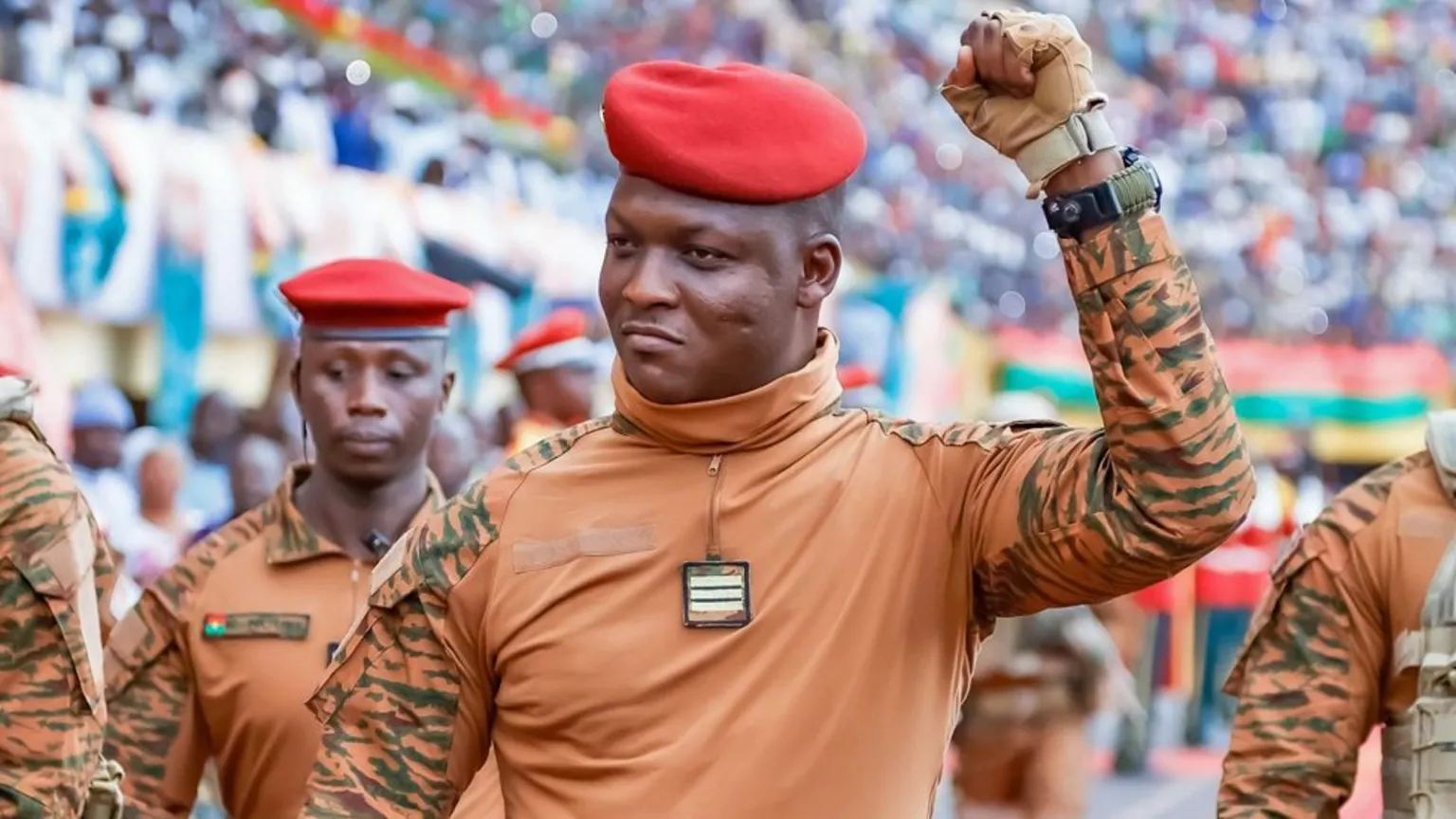

Burkina Faso's Political Landscape: The Fallout from the Dissolution of Political Parties
By Marcus Chen, Senior Political Analyst, The World Now
January 30, 2026
Introduction: The Current State of Civil Unrest
Burkina Faso, a landlocked West African nation long plagued by jihadist insurgencies and political instability, has entered a new phase of turmoil following the military junta's abrupt dissolution of all political parties on January 29, 2026. This unprecedented move by the Transitional Government of Captain Ibrahim Traoré has ignited widespread civil unrest, with protests erupting in major cities like Ouagadougou and Bobo-Dioulasso. Security forces have responded with tear gas and arrests, but the action has galvanized civil society groups, trade unions, and community leaders into uncharted forms of resistance.
Understanding civil society's response is crucial, as it represents a potential pivot point in Burkina Faso's governance trajectory. Historically, the country's politics have oscillated between civilian fragility and military interventions, but the junta's latest decree—framed as a necessity to combat "divisive" politics amid ongoing security crises—threatens to dismantle the last vestiges of multiparty democracy. This situation report analyzes the fallout, emphasizing grassroots mobilization and its implications for power dynamics, drawing on recent developments to project broader geopolitical patterns in the Sahel region.
Historical Context: A Legacy of Political Turmoil
Burkina Faso's political instability is rooted in decades of coups, authoritarianism, and external pressures, culminating in the current junta's consolidation of power. The nation's modern turmoil traces back to the 2014 popular uprising that ousted long-time President Blaise Compaoré after 27 years in power, ushering in a fragile democratic experiment marred by jihadist violence from groups like Jama'at Nasr al-Islam wal-Muslimin (JNIM).
Key milestones illustrate this progression:
- January 24, 2022: Lieutenant Colonel Paul-Henri Sandaogo Damiba stages a coup, citing the government's inability to stem insurgencies displacing over two million people.
- September 30, 2022: Captain Ibrahim Traoré ousts Damiba in a second coup, promising decisive action against terrorists and aligning with anti-Western rhetoric.
- 2023-2025: The junta extends its transitional period multiple times, suspending the constitution and delaying elections amid battlefield setbacks. Ties with Russia deepen, with Wagner Group (now Africa Corps) mercenaries bolstering defenses.
- January 8, 2026: UNHCR signs agreements to support displaced families, highlighting the humanitarian crisis with over 2.5 million internally displaced persons (IDPs), exacerbating political tensions.
- January 16, 2026: Reports underscore the crises' impact on Sahel education, with over 5,000 schools closed in Burkina Faso alone, fueling youth disenfranchisement.
- January 29, 2026: The military government dissolves all 156 registered political parties, freezing their assets and banning activities, linking the move to "divisions hindering national unity."
This timeline connects past coups to the present: each military takeover has justified itself by invoking security imperatives, but the party dissolution marks a radical escalation, echoing Compaoré-era suppressions while responding to recent crises. Social media amplifies this narrative; a viral X (formerly Twitter) post from activist @SahelVoicesBK on January 29 garnered 45,000 retweets: "From Compaoré to Traoré: same playbook, different uniforms. #PartisDissous #BurkinaLibre," underscoring public perception of cyclical authoritarianism.
The Military's Justification: Division or Necessity?
The junta's National Communications Council announced the dissolution via state media, claiming political parties "foment divisions and undermine the fight against terrorism." Officials argue that partisan bickering hampers recruitment for Volunteers for the Defense of the Homeland (VDP) militias and distracts from territorial reconquests, where the military controls only 60% of the country.
Critically, this rationale masks deeper policy failures. Burkina Faso has lost 40% of its territory to jihadists since 2022, with over 8,000 deaths in 2025 alone per Armed Conflict Location & Event Data Project (ACLED). The dissolution suspends democratic processes indefinitely, violating the 2022 ECOWAS transition roadmap that demanded elections by July 2024 (later extended). Citizen engagement plummets: voter turnout in local consultations has halved since the coups.
Policy implications are stark. By centralizing power, the junta risks alienating urban elites and rural communities reliant on party networks for aid distribution. X posts from junta supporters, like @PatrioteBurkina (12K followers), defend it: "Parties profited from chaos; unity now or perish #Traore2026." Yet, this echoes Mali's 2023 party suspensions, which preceded escalated violence, suggesting necessity is a veneer for consolidation.
Grassroots Responses: Civil Society in the Face of Oppression
The unique angle here lies in civil society's adaptive resilience, poised to reshape power dynamics. Unlike past protests quelled by force, current unrest features decentralized, tech-savvy mobilization. In Ouagadougou, the Collective Against Impunity (CCIA-SO) and Burkina Faso's Teachers' Union (UNSTB) called for strikes, drawing 10,000 demonstrators on January 30 despite internet blackouts.
Community leaders in the north, hardest hit by jihadists, form "solidarity committees" bypassing parties. In Dori, imams and women's groups distribute aid via WhatsApp networks, filling governance voids. Social media buzzes: #ResistanceCivile trends with 200K posts, including a video from Bobo-Dioulasso youth leader @FatimaSahel (verified, 30K followers): "No parties? We build movements from mosques to markets. The people are the party now."
This portends new political engagement: horizontal networks could birth alternative movements, like Ethiopia's 2018 youth-led transition or Sudan's 2019 committees. However, risks abound—VDP militias, semi-official and abusive, target activists, per Human Rights Watch reports. Grassroots innovation challenges junta control, potentially shifting power from Ouagadougou to peripheral regions.
International Reactions and Implications
Global responses are muted but consequential. ECOWAS condemned the dissolution on January 30, threatening sanctions akin to those lifted post-Mali polls. The African Union (AU) suspended Burkina Faso's participation in January 2026 (pre-dissolution), demanding constitutional restoration. France, expelled in 2023, critiques via Macron's statement: "Democracy's erosion aids terrorists."
Russia and China offer tacit support; Moscow's ambassador praised "anti-colonial reforms." Aid implications loom: the World Bank paused $500M in 2025 over transition delays; dissolution could halve EU humanitarian flows (€200M annually). U.S. AFRICOM warns of Wagner entrenchment, linking to Sahel-wide instability.
Diplomatic isolation may push Traoré toward the Alliance of Sahel States (AES) with Mali and Niger, accelerating de-ECOWAS alignment and Russian influence.
Looking Ahead: What This Means for Burkina Faso
The current political landscape in Burkina Faso presents a complex interplay of military control and civil resistance. The dissolution of political parties may serve as a catalyst for grassroots movements, potentially leading to a redefined political structure. However, the junta's consolidation of power poses significant risks of further unrest and violence. International actors must remain vigilant, as the situation could influence broader regional stability in the Sahel.
Three scenarios emerge:
- Military Consolidation (High Probability, 60%): Junta entrenches via VDP loyalty, suppressing unrest. Governance militarizes, with "people's consultations" as facades. Jihadist gains persist, displacing more amid aid cuts.
- Grassroots-Led Transition (Medium, 25%): Civil networks coalesce into proto-parties, forcing ECOWAS-mediated talks. Youth/imam alliances demand elections, redefining power via federalism.
- Escalated Unrest/Civil War (Low-Medium, 15%): Protests evolve into armed resistance if arrests mount, fracturing VDP and inviting jihadist recruitment.
Civil society tips the scales: successful adaptations could foster hybrid governance, blending military security with communal democracy, influencing Sahel neighbors.
Conclusion: The Path Forward Amidst Uncertainty
Burkina Faso teeters on authoritarian entrenchment or civil renewal, with party dissolution exposing junta vulnerabilities. Grassroots ingenuity signals power shifts, but without international pressure for elections, militarization prevails. Policymakers must monitor #ResistanceCivile and AES dynamics, as Sahel stability hinges on Ouagadougou. The world watches: ignore at peril.
(Total word count: 1,512)






