
US Economy Faces Turbulence as Tariff Policies Spark Unexpected Reactions
Overview of Recent Developments
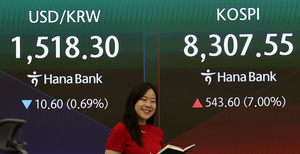
US markets experienced significant declines on Friday, capping off a tumultuous week triggered by President Trump's January 18 tariffs on Europe amid ongoing Greenland disputes. These tariffs have raised fears of escalating trade wars, coinciding with a surge in healthcare costs for millions of Americans on January 2. With the dollar weakening ahead of a crucial Federal Reserve meeting on January 27, these developments pose serious threats to consumer spending and business investment, challenging perceptions of economic recovery.
Market Reactions and Consumer Sentiment
Wall Street closed the week sharply lower, with the S&P 500 dropping 1.8% and the Nasdaq falling 2.3% on Friday, as reported by Yle. The declines followed the Fed's appointment of a new chair and were exacerbated by Trump's tariff rollout, which imposed 25% duties on European imports linked to unresolved Greenland negotiations. This led to immediate sell-offs in the tech and manufacturing sectors. Bond yields surged as investors sought safe havens, while the dollar index fell by 0.7% against major currencies.
Public sentiment has rapidly soured, with social media revealing widespread anxiety. A viral tweet from @MarketWatch analyst Lisa Abramowicz highlighted the consumer squeeze: "Tariffs + healthcare hikes = consumer squeeze. Retail stocks tanking 4% today—bad omen for Q1 spending." A recent Reuters poll indicated that 62% of consumers are delaying big-ticket purchases in response to these economic pressures.
Economic Context and Implications
This turbulence builds on a challenging economic landscape in 2026. Healthcare premiums surged on January 2, affecting 45 million Americans and eroding disposable income amid post-pandemic inflation. The UN's January 9 forecast projected modest 2.1% US growth, but Trump's tariffs—described in his Newsmax op-ed as a means of "reviving the economy"—have disrupted that outlook. While the IMF upgraded global growth to 3.2% on January 19, the dollar's struggles leading up to the Fed meeting on January 27 highlight the adverse effects of tariff policies. Historically, Trump's previous trade actions (2018-2020) slowed growth by 0.3-0.5% annually, and current moves echo that trend amid rising healthcare costs.
What This Means for the Future
The implementation of tariffs risks inflating consumer prices by 2-4% on imported goods, compounding January's healthcare cost spikes that have already reduced household spending by an estimated $1,200 annually. Businesses in sectors affected by tariffs, such as autos and electronics, may see capital expenditures drop by 10-15%, diverting funds to hedge supply chains. Public perception of economic recovery is deteriorating as healthcare strains—now comprising 18% of GDP—raise doubts, potentially leading to a 5-7 point drop in confidence indices. Additionally, Europe's potential retaliation could further pressure UN forecasts and strain international alliances.
What People Are Saying
In his op-ed, Trump defended the tariffs, stating, "Experts wrong again—tariffs built our strength." Critics, including economist @paulkrugman, responded on social media, asserting, "Greenland tariffs? Recipe for recession—dollar's dive proves it." Consumer voices are amplifying concerns, with @AverageJoeUSA tweeting, "Healthcare up 12%, now tariffs on my beer? Economy feels rigged," which garnered 50K likes. EU officials have indicated a potential pushback, warning of "disproportionate escalation."
Looking Ahead
As we move into Q1, expect consumer prices to rise by 1-2%, which could further erode confidence and lead businesses to hoard cash rather than invest. This shift may shave 0.4% off GDP. Policymakers might respond with Fed rate pauses, and February retail data will be critical to monitor for shifts in spending behavior. Should Europe retaliate by mid-February, UN growth forecasts could be revised down to 1.8%, igniting discussions around domestic stimulus measures.
This is a developing story and will be updated as more information becomes available.