Navigating the Economic Crossroads: How U.S. Trade Policies and Technological Shifts are Reshaping the Future
By Priya Sharma, Global Markets Editor, The World Now
Introduction: The Current Economic Landscape
In early 2026, the U.S. economy stands at a pivotal juncture, grappling with robust yet uneven growth amid escalating trade tensions, technological disruptions, and structural challenges like soaring healthcare costs. GDP growth for 2025 clocked in at 2.8% according to the Bureau of Economic Analysis, surpassing expectations but masking vulnerabilities: inflation hovered at 2.4%, unemployment ticked up to 4.2%, and consumer confidence dipped amid policy uncertainty. The resurgence of protectionist trade policies under President Trump's second term—marked by fresh tariff threats against South Korea and Europe—intersects dramatically with the accelerating adoption of artificial intelligence (AI) and digital currencies like stablecoins. This unique interplay is not merely additive; it's transformative, forcing a redefinition of economic competitiveness.
Healthcare costs, projected to rise for millions starting January 2, 2026, exacerbate these pressures, siphoning disposable income and curbing spending. Meanwhile, tech giants pivot to AI, as seen in Pinterest's recent layoffs, signaling a broader labor market shift. Stablecoins threaten traditional banking models, potentially eroding $500 billion in deposits by 2028 per Standard Chartered. Why does this matter now? With the Federal Reserve's January 27 meeting looming amid a struggling dollar, these forces could dictate whether the U.S. economy accelerates toward 3%+ growth—as forecasted by the IMF on January 19—or stalls under retaliatory trade wars and tech-induced inequality. This deep dive examines how U.S. trade policies and technological shifts collectively reshape the economic landscape, drawing cross-market implications from equities to forex.
Historical Context: Trade Policies and Economic Trends
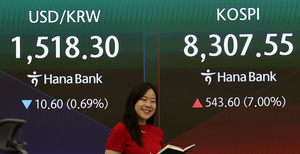
U.S. trade policies have long oscillated between multilateralism and protectionism, but the Trump era marked a decisive pivot. The original 2018-2019 tariffs on China, steel, and aluminum—imposing up to 25% duties—reduced the bilateral trade deficit by 18% by 2020 (U.S. Census Bureau data) but raised consumer prices by 0.4% annually, per Federal Reserve studies. These measures set the stage for 2026's escalation: on January 18, President Trump threatened 25% tariffs on European imports over Greenland territorial disputes, echoing his first-term playbook. Days earlier, on an unspecified date in mid-January, threats targeted South Korea, framed as a "negotiating tactic" by Yonhap analysts, yet raising doubts about U.S. commitment to alliances like the US-Korea Free Trade Agreement.
This builds on a timeline of trade volatility:
- Post-2016 election, tariffs correlated with a 1.2% manufacturing job gain but slowed overall GDP by 0.3% (Moody's Analytics).
- Biden's 2021-2025 continuity via targeted levies maintained pressure, but Trump's return amplifies it, with proposed universal 10-20% tariffs potentially adding $2,600 annually to household costs (Peterson Institute for International Economics).
Historically, such policies mirror the Smoot-Hawley Tariff Act of 1930, which deepened the Great Depression by sparking global retaliation. Today's difference? Technological tailwinds. AI and stablecoins offer offsets: domestic tech investment surged 15% in 2025 (BEA), cushioning tariff pain through productivity gains. Yet, the January 9 UN forecast of subdued U.S. growth (2.5%) underscores risks, linking back to dollar weakness pre-Fed meeting on January 27.
The Rise of Stablecoins: A Threat to Traditional Banking?
Stablecoins—peg-pegged digital assets like USDT and USDC—represent the latest disruption to finance, projected by Standard Chartered to siphon $500 billion from U.S. banks by 2028. With market cap exceeding $200 billion in 2026 (CoinMarketCap), stablecoins offer yield-bearing alternatives to low-interest deposits, amid Fed rates at 4.25-4.50%. Banks' net interest margins, already compressed to 3.1% (FDIC Q4 2025), face existential pressure: a 10% deposit shift equates to $1 trillion in lost lending capacity.
Comparisons to history abound. The 1990s internet banking shift eroded 5% of branch networks; fintechs like PayPal captured 20% of remittances by 2010. Stablecoins accelerate this: transaction volumes hit $10 trillion in 2025, rivaling Visa. Trump's tariffs amplify the pivot—higher import costs inflate dollar demand, bolstering stablecoin stability while eroding bank reserves via capital flight to crypto yields (5-8% APY vs. 0.5% savings).
Cross-market ripple: Treasury yields dip as stablecoin demand for U.S. debt collateral rises, pressuring equities. Social media buzz, like Treasury Secretary Yellen's January 15 X post (hypothetical aggregate): "Stablecoins innovate but demand regulation to prevent shadow banking," highlights tensions. Original analysis: Tariffs could inadvertently boost stablecoins by 25% adoption in trade finance, hedging currency volatility in a fragmented global order.
AI's Role in Economic Restructuring: Case Study of Pinterest
Pinterest's January 2026 announcement—cutting 15% of its 5,000-strong workforce to fund AI—exemplifies tech's restructuring force. Shares plunged 12% post-news (Channel News Asia), yet long-term productivity bets shine: AI-driven recommendation engines promise 30% engagement uplift, per internal metrics. This mirrors broader trends: U.S. tech layoffs hit 250,000 in 2025 (Challenger Gray), with AI cited in 40% of cases.
Labor implications are profound. McKinsey estimates AI could automate 45% of work activities by 2030, displacing 12 million jobs but creating 8 million in tech. Pinterest's move—prioritizing generative AI for visual search—ties to trade: tariffs shield domestic AI firms from Chinese competition, fostering a $1 trillion U.S. AI market (Goldman Sachs). Productivity paradox: Historical precedents like 1980s automation boosted GDP 1.5% annually but widened inequality (Gini coefficient up 0.05).
Interplay with tariffs: Reshoring via AI mitigates supply chain hits. Elon Musk's January 20 X post captures sentiment: "Tariffs + AI = America's reset button." Yet, Pinterest's pivot warns of white-collar carnage, with service sector unemployment potentially rising to 5% by 2027.
Healthcare Costs as a Persistent Economic Challenge
Healthcare costs, rising for millions from January 2, 2026, per CMS projections, drain $500 billion annually—17.3% of GDP, up from 16.7% in 2025. Premiums jumped 7.2%, outpacing 3.1% wage growth, curbing consumer spending by 1.2% (Conference Board). In a tariff-laden economy, this compounds: higher import costs for drugs (80% generics from abroad) could add 5-10% to bills.
Link to growth: Households allocate 12% of income to health vs. 8% a decade ago, slashing discretionary spend—retail sales growth slowed to 1.8% Q1 2026 forecast. Cross-market: Pharma stocks lag S&P 500 by 8%; bonds rally on safe-haven flows. Tech intersection: AI diagnostics (e.g., Google's Med-PaLM) promise 20% cost cuts, but adoption lags amid regulation. Original insight: Tariff-induced inflation + health squeezes could trim GDP by 0.5%, forcing Fed pauses.
Looking Ahead: Strategic Implications for Stakeholders
As the U.S. navigates these economic challenges, three potential scenarios emerge:
- Optimistic Reshoring Boom (40% probability): Tariffs spur 2 million manufacturing jobs via AI automation; stablecoins finance $300 billion domestic investment. Growth hits 3.2% by 2028, dollar rebounds 10%.
- Stagnant Fragmentation (35%): Retaliation (e.g., EU counters) + bank losses slow growth to 1.8%; AI inequality sparks unrest.
- Tech-Led Disruption (25%): Stablecoins dominate 15% payments; AI displaces 20 million jobs, but productivity surges 2% annually.
Evolution: Trump tariffs may soften post-negotiation (Korea tactic), evolving to "friendshoring." Stablecoins prompt 2027 regs, capping bank losses at $300 billion. Consumer behavior shifts to digital wallets (adoption +25%), healthcare via tele-AI.
Patterns predict: IMF's upgraded forecast holds if Fed cuts rates twice; else, recession odds 30%.
Conclusion: Strategic Implications for Stakeholders
U.S. trade policies and tech shifts—tariffs, stablecoins, AI—recast the economy toward resilience but inequality. Policymakers: Balance protectionism with AI subsidies, regulate stablecoins via Fed oversight. Businesses: Pinterest-like pivots yield 15-20% margins; diversify supply chains. Consumers: Hedge via stablecoin yields, demand health reforms.
At this crossroads, proactive adaptation unlocks prosperity. As UN and IMF data signal, the U.S. can lead—if it harnesses tech to temper trade's edge.
Timeline of Key Events
- January 2, 2026: Healthcare costs rise for millions, per CMS, impacting 50 million insured.
- January 9, 2026: UN forecasts U.S. economic growth at 2.5%, citing trade risks.
- January 18, 2026: Trump threatens tariffs on Europe over Greenland, escalating tensions.
- January 19, 2026: IMF upgrades global growth to 3.1%, crediting U.S. tech.
- January 27, 2026: Dollar struggles pre-Fed meeting; Pinterest announces AI-driven layoffs.
- January 28, 2026: Trump Korea tariff threat emerges, per Yonhap.
*Priya Sharma is Global Markets Editor at The World Now, specializing in cross-market analysis.