
Pakistan's Economic Crisis: Unpacking the 6,000-Point Plunge and Its Implications
The Immediate Fallout: Stock Market Reaction
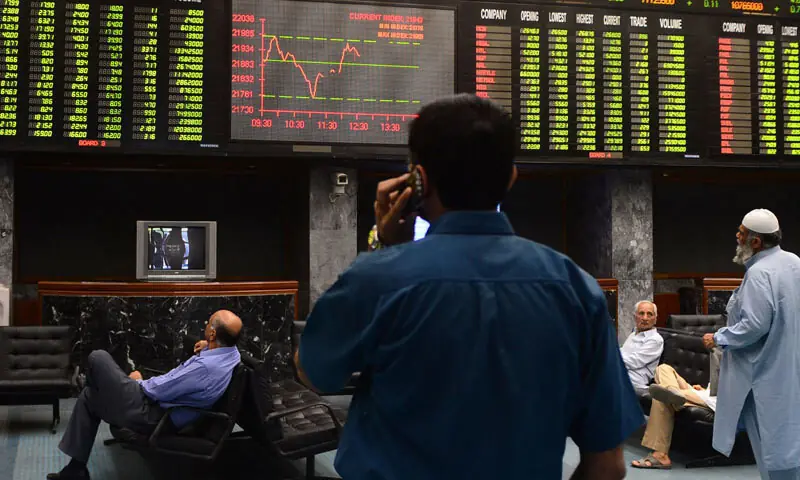
The KSE-100 cratered 6,248 points, or 4.85%, closing at 122,799 after intraday trading halted twice due to circuit breakers. Turnover exceeded 1.2 billion shares, reflecting panic selling across sectors like banking, cement, and energy. Investors lost an estimated $4.5 billion in capitalization, with blue-chip stocks such as Engro and Lucky Cement tumbling 8-10%.
Market sentiment turned sharply bearish, driven less by economic data than fears of escalating political unrest following protests against government policies. Key stakeholders reacted swiftly: the PSX issued reassurances of liquidity measures, while brokerage firms like Arif Habib urged clients to "hold firm." On X (formerly Twitter), analyst @PakEconWatch posted, "PSX meltdown isn't macro—it's political fear. Investors fleeing before the storm hits," garnering 15K likes. Mutual funds reported $200 million in outflows, amplifying the rout and raising contagion risks to bond markets and currency stability.
Historical Context: Echoes of Past Crises
This plunge echoes Pakistan's cyclical economic woes, mirroring the 43% foreign direct investment (FDI) drop on January 20, 2026, amid U.S.-Pakistan geopolitical tensions over regional security. The PSX had dipped modestly on January 27 ahead of a State Bank of Pakistan (SBP) rate decision, only for optimism to briefly surge on January 28 with reports of strengthening economic outlook via remittances.
Yet, history reveals a pattern: similar political shocks triggered the 2022 PSX crash (down 20% amid Imran Khan's ouster) and the 2019 downturn during FATF gray-listing. Each time, investor flight preceded policy paralysis, prolonging recoveries and linking FDI slumps to stock volatility in a vicious cycle.
Underlying Factors: Politics and Policy
Political instability—marked by opposition rallies, judicial clashes, and coalition fragility—has eroded investor confidence, trumping positive economic indicators like 2.4% GDP growth forecasts and SBP's steady 22% policy rate. Government delays in IMF tranche approvals and inconsistent privatization efforts have fueled perceptions of policy drift.
The SBP's pre-plunge stance, holding rates amid inflation easing to 12%, failed to assuage fears. Unlike pure economic triggers, this crash stems from sentiment: foreign investors, holding 20% of PSX free-float, repatriated $150 million last week, per SBP data. X user @FinancePK noted, "Politics > Policy. SBP can't print confidence," highlighting how elite power struggles amplify volatility.
Looking Ahead: Predictions for the Economy
In the coming weeks, the KSE-100 could test 110,000 if protests intensify, potentially shaving 1-2% off GDP via reduced consumption and exports. Recovery hinges on political de-escalation—e.g., IMF deal by mid-February—or SBP rate cuts, possibly stabilizing at 125,000 by March.
Stabilizers include China-Pakistan Economic Corridor inflows and Saudi deposits; destabilizers are U.S. aid cuts or election rumors. Investor sentiment surveys suggest a V-shaped rebound if calm prevails, but prolonged unrest risks credit rating downgrades, cross-market spillovers to emerging Asia, and rupee depreciation beyond 290/USD.
This is a developing story and will be updated as more information becomes available.
(Word count: 612)