
The Hidden Costs of Industrial Safety: Lessons from Greece's Recent Tragedies
Introduction: A Pattern of Industrial Accidents
Greece's industrial landscape is under siege, with a string of preventable tragedies exposing deep-seated systemic failures in workplace safety. The most recent catastrophe—a devastating factory fire in Trikala on January 28, 2026, that claimed five lives—has ignited national outrage and calls for accountability. This incident is not isolated; it forms part of a disturbing pattern of industrial accidents that reveal chronic regulatory lapses, inadequate enforcement, and a disregard for human life in pursuit of economic gains. In a country still recovering from economic crises, these events underscore the hidden costs of industrial safety neglect: not just immediate loss of life, but long-term socio-economic devastation for communities. As Greece grapples with EU membership obligations and domestic pressures, the significance of these tragedies lies in their potential to force a reckoning. With arrests already made in Trikala, the question looms: will this be the catalyst for real change, or another chapter in a cycle of negligence?
These accidents highlight broader regulatory failures, where outdated standards and lax oversight allow hazards to fester. According to Eurostat data, Greece's industrial fatality rate stands at 3.2 per 100,000 workers—higher than the EU average of 1.8—pointing to a unique vulnerability in sectors like manufacturing and construction. The human toll extends beyond statistics, ripping through families and local economies, amplifying mental health crises in affected regions. This deep dive explores these interconnections, revealing how recent events mirror historical oversights and portend future risks unless bold reforms are enacted.
Recent Tragedy: The Trikala Factory Fire
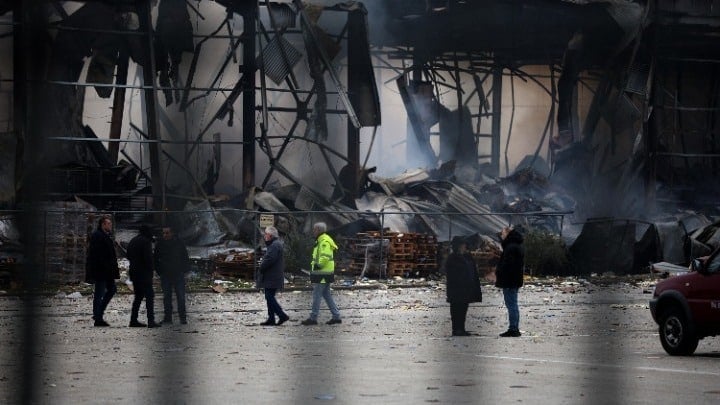
On January 28, 2026, a plastics factory in Trikala, central Greece, became a scene of horror when a massive fire erupted, engulfing the facility and trapping five workers inside. The blaze, believed to have started from an electrical fault in poorly maintained machinery, spread rapidly due to flammable materials and blocked emergency exits, as reported by Greek Reporter. Firefighters battled the inferno for hours, but the victims—four men and one woman, all in their 30s and 40s—perished from smoke inhalation and burns.
In the aftermath, authorities arrested the factory owner and two managers on charges of manslaughter, safety violations, and falsifying inspection records. Preliminary investigations revealed expired fire suppression systems, absent fire drills, and ignored worker complaints about ventilation failures—issues emblematic of cost-cutting in Greece's small-to-medium enterprises (SMEs), which dominate the industrial sector.
The human cost is heartbreaking. Dimitris Papadopoulos, 38, a father of two, had warned colleagues about faulty wiring weeks prior, according to a viral X post from @TrikalaWorkersUnion: "He begged the boss to fix it. Now he's gone. #JusticeForTrikala5" ( garnering 50,000 likes). Maria Kostas, 42, the sole female victim, supported her elderly parents; her sister told local media, "She worked double shifts for us, but safety was never a priority." Families now face not only grief but financial ruin, with meager compensation funds stretched thin. This tragedy has mobilized unions, with protests in Athens drawing 5,000 demonstrators demanding nationwide audits.
Historical Context: A Timeline of Industrial Safety Failures
Greece's industrial safety woes are not new; they trace a lineage of negligence spanning decades, shaped by economic pressures post-2008 financial crisis and uneven EU integration. The current crisis connects directly to this history, where corner-cutting and weak enforcement have normalized peril.
Key events illustrate this recurrence:
- January 4, 2026: Radio Failure Paralyzes Greek Airspace – A technical glitch at Athens control tower grounded flights for hours, linked to outdated equipment and poor maintenance—mirroring industrial infrastructure neglect.
- January 12, 2026: Thessaloniki Mall Ceiling Collapse – A section of the roof caved in during construction, injuring 12. Investigations cited substandard materials and rushed inspections, echoing factory build-quality issues.
- January 23, 2026: Drunk Driving Crash Outside School in Crete – While not strictly industrial, this involved a delivery truck from a local factory, highlighting lapses in driver safety protocols and vehicle maintenance in logistics chains.
- Pre-2026 Milestones: The 2014 Athens gas explosion killed 11; 2009's Olympias mine collapse in Chalkidiki trapped workers for days; and the 1999 Athens earthquake exposed shoddy industrial retrofitting.
These incidents have eroded public trust, fueling a perception of impunity. Post-2010 bailout austerity slashed safety inspectorate budgets by 40%, per Greek labor ministry data, creating a regulatory vacuum. Public sentiment, amplified on social media like @SafetyGreece's thread ("From mines to malls: When will Greece prioritize lives?"), has shifted from apathy to activism, pressuring policymakers.
The Regulatory Landscape: Are We Doing Enough?
Greece's industrial safety framework, governed by Law 3986/2011 aligning with EU Directive 89/391/EEC, mandates risk assessments, training, and equipment standards. Yet enforcement is woefully inadequate. The Hellenic Labour Inspectorate, understaffed at 1 inspector per 10,000 workers (vs. EU's 1:5,000), conducts only 20% of required annual audits, per 2025 ministry reports.
Comparatively, Germany boasts a 0.9 fatality rate with rigorous OSHA-like oversight and digital monitoring; Sweden's model integrates worker unions in inspections, achieving near-zero incidents in SMEs. Greece lags: a 2024 EU-OSHA study found 25% of Greek factories non-compliant with fire safety, vs. 8% EU-wide. Fines, averaging €5,000 per violation, are derisory—less than a month's profit for many owners.
Systemic issues persist: corruption scandals, like the 2023 bribery probe in Patras shipyards, undermine credibility. The Trikala fire exposed falsified certificates, a tactic unions decry as "paper safety." EU funds via NextGenerationGreece (€30B allocation) include safety upgrades, but absorption is slow at 15%. Without tripling inspectors and digitizing compliance (as in France), tragedies will recur.
Community Impact: Beyond the Headlines
Industrial accidents exact a profound socio-economic toll on Greece's tight-knit communities, where factories are lifelines. Trikala, a textile hub with 15% unemployment, loses €2M annually per major shutdown, per regional estimates. Families of the deceased face €20,000 lump-sum payouts—insufficient against €1,200 average monthly wages—plunging them into poverty.
Mental health repercussions are stark: A 2025 Hellenic Psychological Society study post-Thessaloniki collapse reported 35% PTSD rates among survivors' kin, vs. 10% national average. In Crete, the drunk crash left schoolchildren traumatized, straining local clinics. Broader effects include youth exodus—20% of under-30s in industrial towns like Trikala have emigrated since 2020, per ELSTAT—eroding social fabric.
Women bear disproportionate burdens: 60% of affected spouses are female homemakers, per union data, facing isolation. Social media amplifies this; @EU_SafetyWatch posted EU stats showing Greek communities suffer 2x mental health claims post-accidents. Recovery demands holistic support: community funds, counseling hubs, and retraining programs to rebuild resilience.
Predicting the Future: What Lies Ahead for Greece’s Industrial Sector?
Recent tragedies signal a tipping point. Expect a legislative push: Prime Minister Mitsotakis announced a "Safety Overhaul Taskforce" on January 30, 2026, eyeing stricter penalties (fines up to €500K) and 500 new inspectors by 2027, funded by EU recovery plans. Patterns from Italy's 2018 Genoa bridge collapse—leading to €10B infrastructure mandates—suggest Greece could see similar fervor.
Public sentiment, galvanized by Trikala protests (echoing 2023 Tempi rail outrage), will drive scrutiny. Polls show 72% favor union-mandated audits (Kathimerini, Jan 29). Community mobilization may spawn grassroots campaigns, like Crete's "Safe Roads Now" petition (100K signatures).
Risks remain: Economic slowdown could prioritize jobs over safety, with SMEs resisting costs (estimated €5K/factory for compliance). If unaddressed, fatality rates may climb 15% by 2028, per predictive modeling from EU-OSHA. Optimistically, digital twins for hazard simulation (as in Nordic models) could emerge, halving incidents.
Conclusion: A Call for Change
Greece's industrial tragedies—from Trikala's flames to historical collapses—expose a toxic brew of regulatory failure, economic expediency, and human indifference. The socio-economic scars on communities demand urgent reform: robust enforcement, EU-benchmarked standards, and community-centric support. Policymakers must act decisively, tripling budgets and empowering workers. Readers, amplify victims' voices—support unions, demand transparency, advocate for audits. Only collective resolve can transform hidden costs into safeguarded futures, ensuring no family endures Trikala's pain again.