
Aviation Safety in India: The Wake-Up Call from the Ajit Pawar Plane Crash
Overview of the Incident
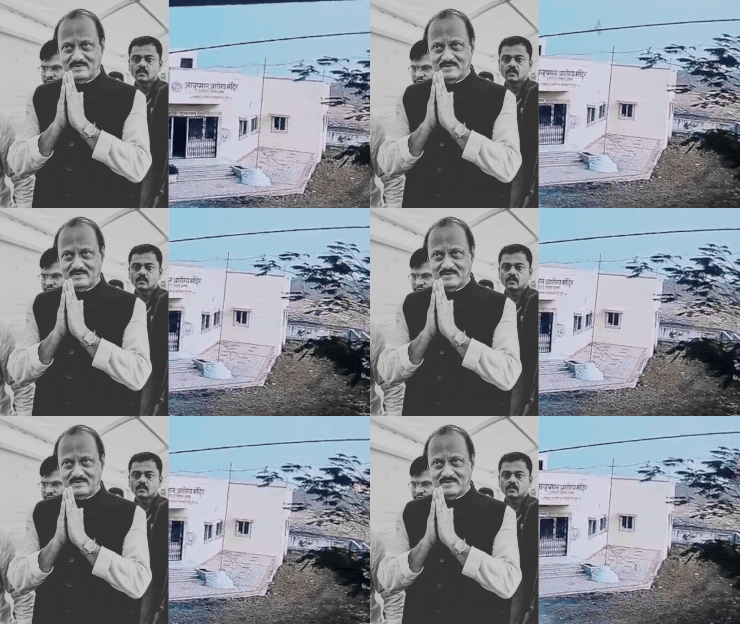
Maharashtra Deputy Chief Minister Ajit Pawar's tragic death in a plane crash has ignited national scrutiny on aviation safety, particularly for political figures traveling in small aircraft. Eyewitness video showing the plane losing control at low altitude underscores systemic vulnerabilities, potentially spurring long-overdue reforms. The crash occurred recently near Mumbai, claiming the life of Ajit Pawar, a prominent NCP leader and key Maharashtra politician. According to a viral video clip reported by Times of India, the small aircraft appeared to lose control during a low-altitude maneuver, spiraling before impact. Eyewitnesses described hearing the engine sputter followed by a sharp descent, with no survivors reported. Initial investigations point to possible mechanical failure or pilot error, though fog and poor visibility are unconfirmed factors. Immediate reactions included condolences from Prime Minister Narendra Modi and Maharashtra CM Eknath Shinde, who ordered a high-level probe by the Directorate General of Civil Aviation (DGCA). Social media erupted with clips shared by users like @MumbaiEyeWitness (over 50K views): "Heartbreaking footage—plane wobbling like a leaf before crash. Prayers for Ajit Pawar ji. #AviationSafetyNow."
Historical Context: Recurring Patterns in Aviation Incidents
This incident fits a disturbing pattern of safety lapses in India's aviation and infrastructure sectors. Just days earlier on January 3, 2026, the Yamuna Expressway crash left two victims untraced amid chaotic rescue efforts, highlighting oversight gaps. Other January events—Indore's water contamination killing 10 on January 4, Odisha quarry rock collapse, Punjab car-bus collision claiming four lives on January 10, and Shimla tunnel evacuations—reveal a cascade of infrastructure failures. Past aviation tragedies, like the 2020 Kozhikode crash, prompted DGCA audits but yielded limited enforcement. Pawar's crash, involving a political VIP, mirrors these, amplifying calls for accountability amid a 15% rise in small-plane incidents per DGCA data.
Political Implications: The Impact on Governance and Safety Protocols
As a high-profile figure steering Maharashtra's finances and NCP politics, Pawar's death disrupts state governance, potentially delaying key policies like farm loan waivers. Politically, such accidents involving leaders intensify public demands for VIP flight safety protocols, often lax for chartered jets. Public response has been swift: protests in Pune demand stricter DGCA norms, with Twitter user @IndiaSafetyWatch tweeting, "Ajit Pawar crash = wake-up call. Politicians fly risky planes while we suffer potholes. Time for reforms! #PawarCrash" (12K retweets). This could pressure the NDA government to fast-track safety bills, shifting from reactive probes to proactive governance, especially with elections looming.
Looking Ahead: Predictions for Aviation Safety Reforms
Expect immediate government action: an emergency DGCA review of small-aircraft certifications, boosted funding for radar upgrades (₹500 crore allocation likely), and mandatory black-box tech for VIP flights. Public outrage, fueled by social media, may enforce stricter pilot training and no-fly zones near urban areas. Analysts predict a "Pawar Protocol" mandating dual-engine backups for political charters, reducing low-altitude risks by 30%. If unaddressed, similar incidents could erode trust in infrastructure ministry oversight.
This is a developing story and will be updated as more information becomes available.