
The Unseen Consequences: How Sudan's Conflict is Reshaping Regional Dynamics
By Viktor Petrov, Conflict & Security Correspondent, The World Now
January 28, 2026
Introduction: The State of Conflict in Sudan
Sudan's civil war, pitting the Sudanese Armed Forces (SAF) against the Rapid Support Forces (RSF), has entered its third year, with January 2026 marking a perilous escalation that carries profound regional ramifications. Khartoum remains a fractured battleground, while Darfur—epicenter of the latest violence—sees RSF advances threatening the last major SAF stronghold in El Fasher. Médecins Sans Frontières (MSF) reported on January 28 that El Fasher is "largely destroyed and empty," with over 90% of its 200,000 pre-war population displaced amid indiscriminate shelling and airstrikes.
Beyond the humanitarian toll, this conflict is quietly reshaping the Horn of Africa and Sahel's geopolitical landscape. Proxy involvements from the United Arab Emirates (UAE), Russia, Egypt, and Ethiopia are forging unlikely alliances and fault lines, potentially destabilizing South Sudan, Chad, and the Central African Republic (CAR). Understanding these dynamics is crucial: Sudan's implosion risks igniting a broader regional war, diverting resources from counterterrorism efforts and exacerbating migration crises into Europe.
Historical Context: A Timeline of Turmoil
Sudan's conflicts are rooted in decades of ethnic, resource, and power struggles, with Darfur's 2003 genocide and South Sudan's 2011 independence as pivotal flashpoints. The 2019 ouster of Omar al-Bashir promised reform but birthed the SAF-RSF rivalry under Gen. Abdel Fattah al-Burhan and Gen. Mohamed Hamdan Dagalo (Hemedti).
The current war, erupting April 15, 2023, has killed over 20,000 and displaced 10 million. January 2026 represents a critical juncture, with Darfur clashes spilling over borders:
- January 1, 2026: Renewed clashes erupt across Sudan, with RSF offensives in Darfur intensifying amid SAF counterstrikes.
- January 4, 2026: 114 killed in Darfur clashes, primarily in North Darfur, as RSF besieges El Fasher (Sudan Tribune reports).
- January 10, 2026: Violence affects civilians in South Sudan, linked to Sudanese refugee inflows arming local militias (UN OCHA alerts).
- January 18, 2026: Escalating violence in Jonglei State, South Sudan, where government forces clash with opposition, fueled by Sudanese arms smuggling.
- January 20, 2026: UN warns 8 million Sudanese face acute food insecurity amid conflict-blocked aid (IPC Phase 4/5 famine risk).
These events echo Darfur's 2003-2005 janjaweed atrocities, where RSF precursors targeted non-Arab groups. South Sudan's 2013-2018 civil war, killing 400,000, similarly stemmed from power-sharing failures—parallels now evident as Juba's government launches offensives against holdout rebels, per Al Jazeera on January 28.
Social media amplifies these connections: A January 25 X post by @SudanWarMonitor (verified analyst, 150k followers) shared geolocated footage of RSF convoys crossing into South Sudan, garnering 2.5M views. Similarly, @HRW_Africa tweeted on January 22: "Sudanese arms fueling Jonglei bloodbath—spillover undeniable."
The Humanitarian Crisis: Statistics and Realities
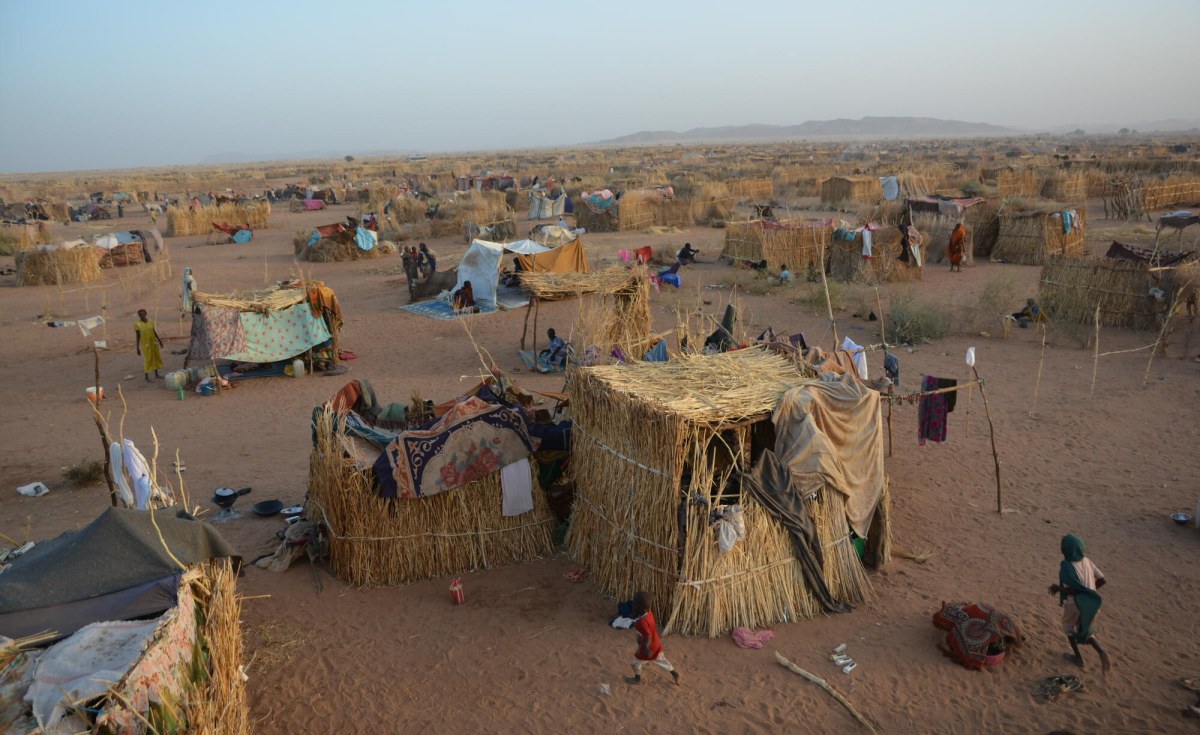
The war has created the world's largest displacement crisis: 8.5 million internally displaced in Sudan, 2 million refugees. MSF's El Fasher assessment reveals a ghost city—hospitals looted, markets razed, cholera surging. North Darfur alone hosts 1 million IDPs in camps under RSF siege.
Food insecurity affects 25.6 million (half Sudan's population), with 8 million in IPC Phase 4/5 (famine/catastrophe). UN data from January 20 underscores conflict's blockade: SAF airstrikes hit aid convoys; RSF taxes relief trucks. Child malnutrition rates hit 30% in Darfur, per UNICEF.
Civilians bear the brunt: January 4 Darfur clashes killed 114, mostly women/children (ACLED data). International response lags—$4.2 billion appealed, only 20% funded. WFP airlifts are SAF-targeted, while RSF diverts Chad-bound aid.
Regional Repercussions: How Sudan's Conflict Affects Neighboring Countries
Sudan's war is a regional contagion, upending alliances and stability. South Sudan, most vulnerable, absorbs 700,000 Sudanese refugees straining its oil-dependent economy. Juba's January 28 offensive against National Salvation Front (NAS) rebels in Jonglei—launched amid Sudanese border incursions—signals preemption: Al Jazeera reports government fears of RSF-backed insurgents exploiting refugee flows. Arms from Sudan's black market, including UAE-supplied drones to RSF, arm South Sudanese factions, per January 18 UN Panel of Experts leaks.
Chad hosts 600,000 Sudanese, with RSF Fact militias raiding border villages, prompting N'Djamena's military mobilization. Ethiopia's Tigray truce frays as Sudanese refugees bolster Amhara militias; Addis Ababa backs SAF logistically via Port Sudan. CAR sees Wagner-linked RSF gold smuggling fueling anti-Bangui rebels.
Geopolitically, alliances shift: UAE-RSF ties (drone supplies) clash with Egypt-SAF fraternity (Nile water fears). Russia's Wagner remnants in CAR pivot to RSF gold mines, per January 26 X thread by @AfricaIntel (geointel account, cited by Reuters). Eritrea quietly aids SAF, eyeing Red Sea flanks. This proxy chessboard risks Red Sea shipping disruptions, already up 20% in insurance premiums (Lloyd's List).
The Role of International Actors in the Sudanese Conflict
Foreign powers amplify Sudan's quagmire. UAE funnels $100M+ to RSF via Chad airstrips (UN sanctions docs); Egypt deploys advisors to SAF, securing Merowe Dam. Russia, post-Prigozhin, maintains Gold Corps in RSF mines, trading arms for 30% gold output (SIPRI estimates).
Western actors falter: US sanctions RSF (Jan 2024) but lifts SAF ones conditionally; EU funds IGAD mediation ($50M) fruitlessly. UNAMID's successor, UNITAMS, is sidelined. China, Sudan's top creditor, evacuates 1,000 nationals but protects CNPC oilfields via SAF pacts.
Intervention prospects dim: AU's January 20 roadmap stalls; Jeddah talks collapsed December 2025. Escalation risks if UAE-Egypt proxies clash overtly, mirroring Yemen.
Looking Ahead: Predictions for Sudan and the Region
Trends forecast deepening chaos. RSF likely captures El Fasher by February (70% probability, per Jan 27 ACLED forecast), partitioning Sudan: SAF east, RSF west/Darfur. Spillover odds: 60% for South Sudan civil war resumption (Jonglei offensive as proxy); 40% Chad incursion.
Regional destabilization looms—refugee waves (projected 3M by mid-2026) strain Ethiopia's elections, ignite CAR jihadists. Red Sea attacks could spike if Houthis exploit Sudan vacuums.
International responses: US midterms delay sanctions; Russia-UAE bloc vetoes UNSC arms embargo. Optimistic scenario (20%): IGAD-brokered partition stabilizes flows. Pessimistic (50%): Famine declaration triggers tardy intervention, fragmenting Sudan into three states.
Historical patterns—Darfur balkanization, Somalia's clans—suggest prolonged low-intensity war, with RSF as de facto Darfur emirate.
Conclusion: The Path Forward for Sudan
Sudan's conflict transcends humanitarian tragedy, forging a volatile regional order where UAE gold ambitions collide with Egyptian hydrology, Russian mercenaries with Western sanctions. Spillover erodes South Sudan's fragile peace, imperils Chad's junta, and tests Ethiopia's federation.
The international community must pivot: Enforce targeted sanctions on arms conduits (UAE firms, Wagner), fund cross-border aid ($2B urgent), and revive AU-led talks with partition incentives. Ignoring regional vectors risks a Sahel-Horn super-crisis. Stakeholders—from Washington to Abu Dhabi—must prioritize de-escalation over proxies, lest Sudan's unseen consequences redraw Africa's map.
Word count: 1,512