
The Shifting Sands of War: Israel's Strategic Calculus Amidst Rising Casualties and Global Tensions
By Viktor Petrov, Conflict & Security Correspondent, The World Now
January 30, 2026
This report examines the strategic implications of the rising death toll in the Israel-Gaza conflict—now acknowledged at 70,000 by Israeli officials—and the bolstering international military presence, particularly the U.S. naval deployment in the Gulf of Aqaba. These factors are reshaping Israel's military calculus, potentially forcing a pivot from sustained ground operations toward calibrated diplomatic maneuvers amid eroding domestic support and heightened global scrutiny.
Current Situation Overview
As of January 30, 2026, the Israel-Gaza war enters its third year with Israeli Defense Forces (IDF) maintaining operational control over approximately 65% of Gaza's territory, according to IDF briefings. Recent military engagements center on urban clearance operations in Khan Younis and Rafah, where IDF armored brigades—equipped with Merkava IV tanks and Trophy active protection systems—have neutralized over 200 Hamas militants in the past 48 hours, per IDF statements. Hamas rocket fire has diminished to sporadic launches (fewer than 10 per day), intercepted at 95% efficacy by Iron Dome batteries.
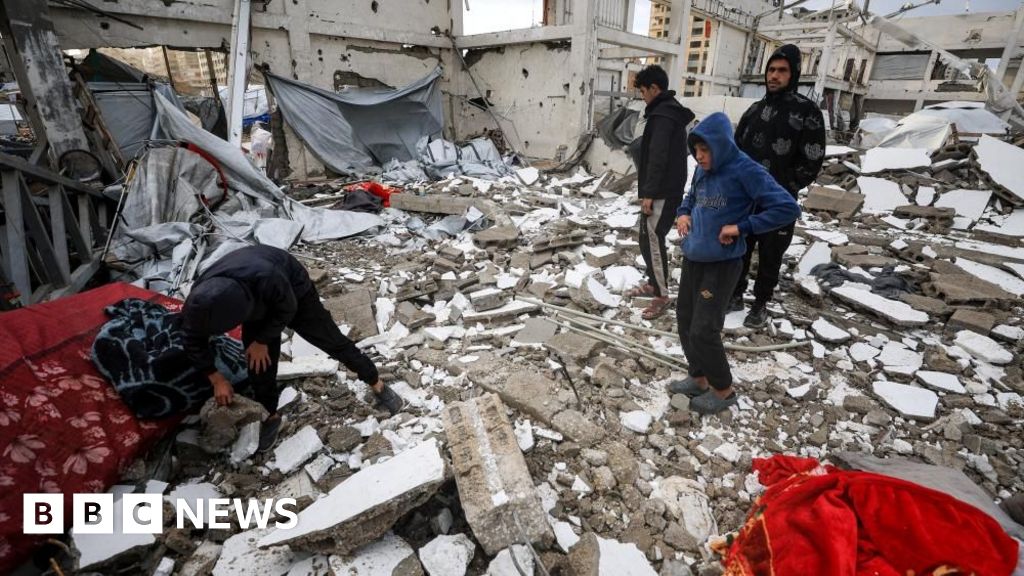
A pivotal development is the Israeli official's acceptance of Hamas's casualty estimate of 70,000 war dead, as reported by Israeli media and cited by the BBC. This figure, encompassing combatants and civilians, contrasts sharply with prior IDF estimates of 40,000-45,000, primarily combatants. The acknowledgment, sourced from a senior military intelligence officer, signals a rare convergence in data amid intelligence-sharing pressures from U.S. partners.
Implications for public perception are profound. In Israel, polls from the Israel Democracy Institute (conducted Jan 28) show 52% of respondents viewing the toll as "unsustainable," eroding support for Prime Minister Netanyahu's coalition from 48% to 39% approval. In Gaza, Hamas leverages the figure for recruitment, framing it as "genocidal resistance fuel" in propaganda, boosting morale despite leadership decapitation strikes (over 15 senior commanders killed since October 2025).
Historical Context: Two Years of Conflict
The Israel-Gaza war, ignited by Hamas's October 7, 2023, attacks killing 1,200 Israelis, has evolved through phases of escalation, truce, and resumption. Key decisions by Israeli leadership—prioritizing Hamas's dismantlement over rapid hostage recovery—have shaped the attritional strategy persisting today.
- October 7, 2023: Hamas infiltrates southern Israel, prompting Operation Swords of Iron. IDF mobilizes 360,000 reservists.
- Late 2023-Early 2024: Ground invasion secures Gaza periphery; tunnel networks (estimated 500km) become focal point.
- Mid-2024: Phased U.S.-brokered truce fails after Hamas violations.
- 12/31/2025: Heightened responses to border movements; IDF reports 200 militants neutralized amid attempted incursions.
- 1/15/2026: U.S.-mediated Gaza truce enters Phase Two, involving partial IDF withdrawal and hostage exchanges (50 released). Hamas breaches terms with rocket barrages, resuming full hostilities.
- 1/30/2026: Israel accepts Hamas war dead figures, marking a tactical admission amid stalled Phase Two.
Past strategies, such as the 2014 Protective Edge operation's focus on air superiority, influenced current doctrine: emphasizing combined arms (air, ground, cyber) to degrade Hamas's 30,000-strong force by an estimated 60%. However, incomplete tunnel destruction (40% remaining) has prolonged the conflict, mirroring 2008-09 Cast Lead's unfinished objectives.
International Military Dynamics: The US Naval Presence
The docking of the U.S. guided-missile destroyer USS Thomas Hudner in the Gulf of Aqaba on January 28—reported by Middle East Eye—represents a strategic repositioning amid fears of Iranian retaliation. Aqaba, Jordan's Red Sea port, positions the warship within 200 nautical miles of Iranian naval assets in the Strait of Hormuz, enhancing U.S. Central Command's (CENTCOM) deterrence posture. Equipped with Aegis ballistic missile defense and Tomahawk cruise missiles, the deployment signals implicit U.S. backing for Israel against Hezbollah or Houthi proxies.
Strategically, this counters Iran's shadow fleet of fast-attack boats and Shahab-3 missiles, following Tehran's January 25 threats post-IDF strikes on Syrian IRGC positions. U.S. support—$18 billion in aid since 2023—emboldens Israel's operations but imposes red lines: no strikes on Iranian nuclear sites without consultation, per leaked Pentagon memos.
Opposition from regional actors complicates dynamics. Qatar and Egypt host mediation talks, while Turkish naval patrols in the eastern Mediterranean signal NATO fractures. This presence impacts Israeli decisions by providing early-warning radar coverage, reducing operational risks in Rafah but tying IDF hands against broader escalation.
Casualty Count and its Impact on Public Sentiment
The 70,000 figure—predominantly Palestinian civilians (Hamas claims 90%)—has seismic effects. IDF losses stand at 850 killed (official), with social media posts from @IDF_Spokesperson acknowledging "high costs" in Khan Younis. Hamas reports 500 IDF casualties recently, unverified but echoed in Telegram channels.
In Israel, the toll fractures morale: reservist refusal rates hit 15% (Haaretz, Jan 29), fueled by media narratives contrasting tactical wins (e.g., 1,200 Hamas fighters killed in Q1 2026) against human costs. Former PM Ehud Olmert's X post amplifies calls for policy shifts, amplifying anti-war protests in Tel Aviv (20,000 attendees, Jan 29).
Globally, media shapes perceptions: BBC/Al Jazeera emphasize civilian tolls, eroding Israel's "precision" narrative; Fox News/CNN highlight Hamas perfidy. This duality pressures Netanyahu's government, with Knesset debates (Jan 30) debating withdrawal timelines.
What This Means: A Crossroads for Israel
Rising casualties and U.S. naval bolstering place Israel at a strategic crossroads. Military strategies—forged in two years of grinding attrition—face unsustainability, with 70,000 dead catalyzing domestic dissent and global isolation. Netanyahu's calculus must balance Hamas eradication against coalition survival, leveraging U.S. deterrence for breathing room.
Diplomatic efforts, long sidelined, emerge critical: Phase Three truces or Saudi normalization could redefine security paradigms. Failure risks quagmire, echoing U.S. Afghanistan withdrawal. Watch for Knesset votes and CENTCOM signals—the sands shift toward negotiation or wider war.
Key Locations (for geographic context):
- Khan Younis & Rafah (Gaza): Primary IDF thrust areas, urban warfare hubs.
- Gulf of Aqaba: U.S. naval forward base, 150km from Eilat.
- Strait of Hormuz: Iranian threat vector, 1,000km strike range.
Timeline (Major Events):
- Oct 7, 2023: Hamas attacks launch war.
- 12/31/2025: IDF responds to border movements.
- 1/15/2026: Gaza truce Phase Two begins, collapses.
- Jan 28, 2026: USS Thomas Hudner docks in Aqaba.
- 1/30/2026: Israel accepts 70,000 dead figure.