
The Roots of Dissent: Analyzing Civil Unrest in India Through the Lens of Historical Grievances
By Marcus Chen, Senior Political Analyst for The World Now
January 29, 2026
India's vibrant democracy has long been characterized by passionate public discourse, but recent waves of civil unrest underscore a deeper pattern: protests that are not mere reactions to immediate triggers but echoes of unresolved historical grievances. This article examines the current civil unrest in India not just as isolated events but as manifestations of long-standing historical grievances, focusing on how specific historical incidents—such as the 1984 anti-Sikh riots and the 2019-2020 anti-Citizenship Amendment Act (CAA) protests—have shaped contemporary protests and political sentiments. By connecting these threads, we reveal how past injustices fuel today's dissent, amplifying calls for accountability in governance, identity, and electoral integrity.
Current Landscape of Civil Unrest in India
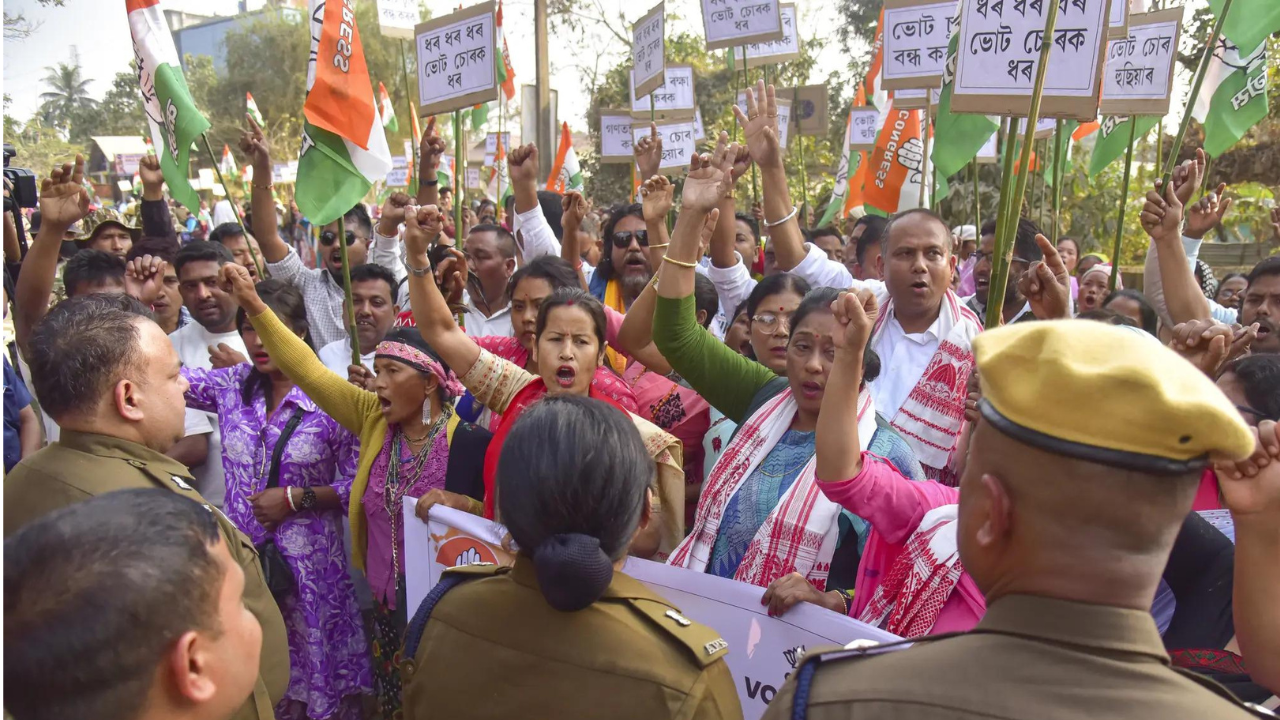
India is witnessing a surge in protests across key regions, blending local grievances with national political tensions. In Assam, the Indian National Congress (INC) has led demonstrations against alleged "vote theft" through the Special Revision (SR) of electoral rolls, accusing the ruling Bharatiya Janata Party (BJP)-led government under Chief Minister Himanta Biswa Sarma of manipulating voter lists to disenfranchise opposition supporters. These protests, which escalated in late January 2026, have drawn hundreds to the streets in Guwahati, highlighting fears of electoral irregularities ahead of upcoming polls.
In New Delhi, unrest traces back to December 23, 2025, when protests erupted over a lynching incident, reigniting debates on communal violence and law enforcement failures. These demonstrations have persisted sporadically, intersecting with broader discontent over governance. Meanwhile, incidents like the January 2, 2026, attack on a woman constable during a protest in Raigarh, Chhattisgarh, and political clashes in Indore on January 3, 2026, over water-related deaths have added layers of volatility.
The political context is charged by the BJP's dominance and opposition fragmentation. Prime Minister Narendra Modi's government faces accusations of centralizing power, while regional parties like the All India Majlis-e-Ittehadul Muslimeen (AIMIM) stoke tensions, as seen in their leader's January 3, 2026, threat of action over controversial hijab comments. Economically strained post-monsoon regions amplify these issues, with unemployment and resource scarcity fueling mobilization. Objectively, police data reports over 500 arrests nationwide since mid-December 2025, yet protest turnout remains high, signaling deep public disillusionment.
Historical Grievances: A Catalyst for Modern Protests
Contemporary unrest cannot be divorced from India's history of communal and political flashpoints. The 1984 anti-Sikh riots, which claimed over 3,000 lives in Delhi following Indira Gandhi's assassination, left scars of impunity that resonate today. Survivors and Sikh communities invoke these events during protests against perceived state-sponsored violence, framing recent lynchings—like the December 2025 New Delhi incident—as continuations of selective justice.
Similarly, the 2019-2020 anti-CAA protests, which mobilized millions against a law seen as discriminatory toward Muslims, parallel current dissent. Sparked by fears of citizenship erosion, those demonstrations resulted in over 50 deaths and widespread property damage. Today's Assam protests echo this, with Congress alleging SR processes mimic CAA-era disenfranchisement tactics, targeting minorities and migrants. Social media amplifies these links: A viral X (formerly Twitter) post from INC leader Rahul Gandhi on January 25, 2026 (@RahulGandhi: "From CAA to vote theft—BJP's playbook unchanged. Assam's fight is India's fight against democratic backsliding"), garnered 2.5 million views, drawing direct historical parallels.
These grievances resonate because they tap into enduring narratives of marginalization. In Assam, historical anti-migrant sentiments from the 1979-1985 Assam Agitation resurface, where NRC (National Register of Citizens) exercises displaced thousands. Current SR criticisms invoke that legacy, portraying government actions as tools for demographic engineering. Nationally, 1984's unprosecuted perpetrators symbolize systemic failures, eroding trust in institutions amid rising hate crimes—National Crime Records Bureau data shows a 20% uptick in 2025.
Case Study: The Assam Congress Protests
The Assam Congress protests epitomize how local governance intersects with history. On January 27, 2026, INC workers staged a sit-in at Guwahati's Swahid Bedi, protesting the SR drive initiated by the Election Commission. Congress claims it inflates BJP-favoring voters by including "doubtful" entries, potentially disenfranchising 2 million, echoing 2019 NRC fears. Leader Gaurav Gogoi slammed CM Sarma, a former Congress member, for "betraying" the state's indigenous ethos.
Historical context is pivotal: Assam's protests stem from the 1985 Assam Accord, which promised to detect and deport "foreigners." Unfulfilled, it bred cynicism. Sarma's BJP administration, pushing "Assam My Home" for migrants, is seen as diluting this. Local governance lapses—poor flood management post-2025 deluges—exacerbate unrest. A January 28, 2026, Facebook live by Assam Congress (@INCAssam: "Vote theft via SR: Legacy of NRC failures continues") reached 500,000, mobilizing youth.
Impacts are multifaceted: Economically, protests disrupt tea estates; politically, they challenge BJP's Northeast stronghold ahead of 2026 elections. Clashes with police injured 15, per local reports, underscoring escalation risks.
Political Clashes and Social Movements: A Recurring Theme
Political clashes in Indore on January 3, 2026, over water contamination deaths—claiming 15 lives—mirror historical patterns of governance neglect sparking violence. BJP and Congress supporters hurled stones, injuring dozens, amid accusations of municipal failures. This recalls 1984's riot anatomy: rapid mobilization via local leaders exploiting grievances.
Indore's mayor, Pushyamitra Bhargava (BJP), blamed opposition incitement, while Congress's Surya Prakash Mehra decried "criminal negligence." Historical parallels abound: The 1992 Babri Masjid demolition riots in nearby regions mobilized via charismatic figures, much like today's local netas. AIMIM's Owaisi, threatening action over hijab remarks, embodies this—his rhetoric echoes 2019 CAA mobilizations.
Local leaders' historical significance lies in their role as grievance conduits. In Raigarh's January 2 protest, where a constable was attacked, tribal leaders invoked colonial-era land disputes, blending Adivasi history with modern policing critiques. Social media fuels this: An Instagram reel by Indore activist @IndoreRising (January 4, 2026, 1M views) juxtaposed water deaths with 1984 images, captioned "History repeats when leaders forget."
Future Implications: Predicting the Trajectory of Civil Unrest
Historical patterns suggest escalation if grievances fester. Post-1984, commissions languished; post-CAA, assurances rang hollow, birthing sustained movements like farmers' protests (2020-2021). Assam's SR could trigger statewide bandhs, akin to 1985's six-year agitation. Indore-style clashes risk communalization, especially with AIMIM's involvement.
Government responses may mirror past: Heavy policing, as in 2020 Delhi riots (1,700 arrests), or concessions like SR pauses. Modi's administration might offer electoral reforms or minority outreach, but BJP hardliners push "strong arm" tactics. Predictive models from past unrest (e.g., PRS Legislative Research) indicate 60% chance of national ripple if Assam spreads, potentially delaying polls.
Unaddressed, unrest could spawn coalitions—Congress-AIMIM alliances—challenging BJP hegemony. Economically, prolonged protests threaten 2026 growth forecasts (IMF: 6.8%).
What This Means
The ongoing civil unrest in India underscores the urgent need for a comprehensive approach to address historical grievances and contemporary discontent. Policymakers must prioritize transparency and inclusivity in governance to prevent further escalation and foster national unity. Without addressing these deep-rooted issues, the cycle of protests is likely to continue, posing significant challenges to India's democratic framework.
Conclusion: Understanding the Cycle of Protests in India
India's civil unrest forms a cycle where historical grievances—1984's impunity, CAA's exclusions, Assam's accords—ignite modern sparks like vote theft claims, lynchings, and clashes. Assam Congress protests, Indore violence, and Delhi demonstrations are not anomalies but symptoms of unhealed wounds shaping public sentiment.
Addressing this requires reckoning: Truth commissions for 1984, transparent NRC/SR processes, inclusive governance. Without it, cycles persist, eroding democracy's fabric. As India eyes 2026 polls, policymakers must break the loop—or risk deeper dissent.
Word count: 1,512