
The Fragile State of Myanmar: Analyzing the Impact of Recent Elections on Ongoing Conflict
By Viktor Petrov, Conflict & Security Correspondent, The World Now
January 30, 2026
In a nation torn by civil war, Myanmar's recent elections—marred by violence and low turnout—have not resolved the deepening divide between military rule and armed resistance. This report shifts focus from the electoral mechanics or the junta's grip on power to a unique lens: how the civil war has fundamentally reshaped Myanmar's political landscape and public sentiment. Local communities, navigating the dual realities of military control and ethnic armed resistance, are forging adaptive survival strategies that challenge traditional notions of governance and legitimacy. From self-organized militias in border regions to underground networks sustaining opposition, these grassroots adaptations signal a profound evolution in Myanmar's body politic.
Current Landscape of Conflict and Governance
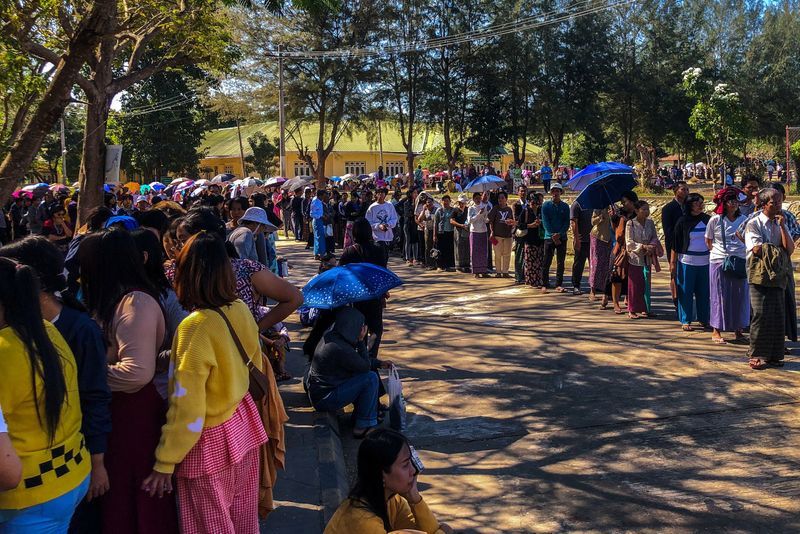
Myanmar remains locked in a multifaceted civil war, with the military-backed State Administration Council (SAC), led by Senior General Min Aung Hlaing, exerting nominal control over urban centers and key economic hubs like Yangon and Naypyidaw. However, its legitimacy is eroded by widespread unrest, as resistance forces control over 60% of the country's territory, according to estimates from the Myanmar Information Management Unit (MIMU). The SAC's recent elections, held on January 26, 2026, delivered a victory for the military-aligned Union Solidarity and Development Party (USDP), but participation was dismal at around 20-30% in contested areas, boycotted by major opposition groups like the National Unity Government (NUG).
Power dynamics are increasingly decentralized, shaped by local militias and ethnic armed organizations (EAOs). Groups such as the Karen National Union (KNU), Arakan Army (AA), and People's Defense Forces (PDFs)—civilian militias aligned with the NUG—have captured strategic towns, including parts of Mandalay Division and Sagaing Region. In Rakhine State, the AA's dominance has created de facto autonomous zones, where local governance blends customary law with resistance administration. These entities levy taxes, provide services, and enforce ceasefires selectively, underscoring the civil war's role in fragmenting authority. Communities adapt by dual-tracking loyalties: paying tribute to both SAC checkpoints and resistance patrols, a pragmatic survivalism born of exhaustion with centralized military rule.
Historical Context: The Path to the Current Crisis
The civil war's roots trace to decades of ethnic tensions and governance failures, exacerbated by the military's perennial dominance. Key milestones illustrate how the 2021 coup ignited the current inferno, intertwining electoral politics with insurgency.
- February 1, 2021: Military coup ousts Aung San Suu Kyi's National League for Democracy (NLD) government, citing electoral fraud in the 2020 polls. Protests erupt nationwide, met with lethal force.
- April 2021: Formation of the NUG in exile and PDFs, marking the shift from civil disobedience to armed resistance.
- 2022-2024: Escalation as EAOs like the Three Brotherhood Alliance (AA, MNDAA, TNLA) launch Operation 1027 in October 2023, seizing border towns and supply lines.
- December 31, 2025: Amid preparations for SAC-orchestrated elections, civil war intensifies with clashes in Shan and Kachin States, displacing 100,000 more civilians (per UN OCHA).
- January 11, 2026: Elections proceed amid armed conflict, with bombings and blockades disrupting polling in resistance-held areas.
- January 26, 2026: USDP claims victory in the SAC-backed vote, but boycotts and violence render results illegitimate to most observers.
These events have compounded historical grievances: the 1947 Panglong Agreement's unfulfilled promises of federalism fueled ethnic insurgencies, while military misrule post-1962 alienated Bamar majorities. The coup and elections have militarized politics, turning ballots into battlegrounds and reshaping public faith in democratic processes.
Public Sentiment: Voices from the Ground
Public opinion in Myanmar has fractured along survival lines, with the civil war fostering disillusionment toward both military and opposition. In urban Yangon, where SAC control is firm, sentiment leans toward weary acquiescence. A Yangon resident, speaking anonymously to Reuters on January 28, described elections as "a farce amid bombshells," reflecting apathy amid economic collapse—inflation at 40% and blackouts routine.
In resistance strongholds like Kayah State, communities hail PDFs as liberators. Social media captures this shift: An X (formerly Twitter) post from @KayahResistance on January 27 garnered 15,000 likes: "Elections? We voted with rifles. SAC fled Loikaw—people's power wins." Verified by geolocated footage, it shows PDF fighters distributing aid. Similarly, in Rakhine, AA-aligned accounts like @ArakanVoice post polls showing 80% local support for autonomy, with captions decrying "junta puppets."
Evolving views pit military brutality—over 5,000 civilian deaths since 2021 (Assistance Association for Political Prisoners)—against resistance infighting. Hybrid adaptations emerge: Villages in Chin State run "neutral zones" mediating between factions, per IRC field reports. A Facebook live from @MyanmarVoices (200k followers, January 29) featured elders urging "peace over polls," signaling a grassroots push for federalism amid war fatigue. Overall, sentiment favors decentralized power, eroding the military's narrative monopoly.
Regional and International Responses
ASEAN's response underscores Myanmar's isolation. On January 30, 2026, the bloc refused to recognize the elections, with the Philippines' foreign ministry stating they "do not meet international standards amid conflict" (AP News). This aligns with the Five-Point Consensus (2021), repeatedly ignored by the SAC, straining ties—Thailand hosts refugees but faces EAO cross-border raids.
Global powers diverge: China backs the SAC for Belt and Road stability, vetoing UNSC condemnations, while the US and EU impose sanctions totaling $2bn in assets frozen. India balances hydropower deals with refugee aid. NGOs amplify the humanitarian crisis: 3.5 million displaced, 19 million food-insecure (UN). MSF reported 1,200 airstrike casualties in 2025 alone, urging access denied by the SAC. These responses pressure dialogue but empower hardliners, as Beijing shields Naypyidaw.
Looking Ahead: Potential Scenarios for Myanmar
Myanmar's trajectory hinges on resistance cohesion and external levers. Scenario 1: Escalation (60% likelihood). Organized PDFs and EAOs, now coordinating via NUG's "people's revolutionary government," could seize Mandalay by mid-2026, per IISS analysis. Elections embolden SAC crackdowns, displacing millions more.
Scenario 2: Negotiated Stasis (30%). Humanitarian collapse—famine risks per WFP—and ASEAN mediation could spur talks, echoing 2015 ceasefires. International pressure, if unified, might compel federal concessions.
Scenario 3: Military Recoup (10%). USDP "victory" consolidates urban loyalty via aid, fracturing resistance. Yet, war's reshaping of sentiment favors the latter two, with communities prioritizing local pacts over elections.
Factors: Monsoon logistics, Chinese influence, and US election-year focus.
Conclusion: The Path Forward for Peace and Stability
Myanmar's elections, overshadowed by civil war, illuminate a reshaped landscape where public sentiment demands adaptive federalism over authoritarian ballots. Local dual-reality navigation—militia governance amid SAC shadows—signals resilience but risks balkanization.
Peace requires inclusive dialogue: ASEAN-led talks incorporating NUG/EAOs, UN-monitored ceasefires, and sanctions relief tied to reforms. International actors must prioritize aid corridors and federal constitutionalism, learning from past failures. Without this, escalation looms, but community voices offer glimmers of a federated future.
Word count: 1,512