
South Korea Grapples with Nuclear Tensions and Strained Alliances Amid Regional Geopolitics
Seoul, January 9, 2026 – South Korea has called for an immediate freeze on North Korea's nuclear program while seeking China's mediation to ease escalating tensions on the Korean Peninsula, even as domestic discord over U.S. foreign policy and preparations for bilateral nuclear talks underscore the nation's delicate balancing act in global geopolitics.
The appeal for a nuclear freeze, articulated on January 7, reflects Seoul's growing urgency in addressing Pyongyang's advancing weapons capabilities amid stalled diplomatic efforts. South Korean officials emphasized the need for multilateral intervention, specifically highlighting China's potential role as a mediator given its economic leverage over North Korea and historical influence in denuclearization talks. This push comes against a backdrop of repeated North Korean missile tests and rhetoric in recent months, which have heightened fears of escalation.
In parallel, South Korea announced the formation of an interagency team on January 9 to coordinate negotiations with the United States on civil uranium enrichment and spent nuclear fuel reprocessing. The move, led by the Ministry of Science and ICT alongside other government bodies, aims to advance Seoul's long-standing bid for greater autonomy in its peaceful nuclear energy program. South Korea, one of the world's largest operators of nuclear power plants, currently operates under restrictions from a 1970s U.S.-South Korea atomic energy agreement that limits such activities to prevent proliferation risks. The interagency effort signals anticipation of renewed discussions under the Trump administration, which has prioritized energy independence and alliances but also imposed stringent non-proliferation standards.
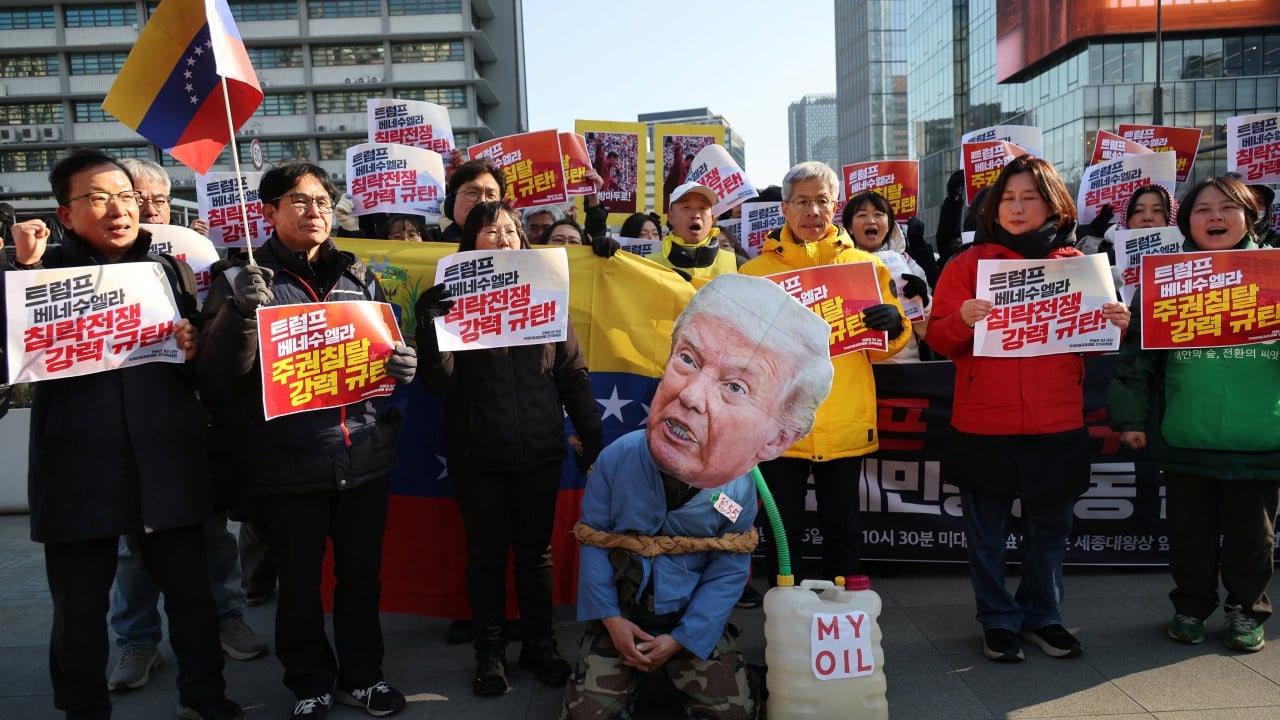
Adding to the geopolitical strain, a senior South Korean official sparked controversy by labeling a recent U.S. military operation in Venezuela a "violent atrocity." Park Seok-woon, chairman of a committee under the Prime Minister’s Office and a veteran liberal activist, joined a protest rally on Monday outside the U.S. embassy in Seoul. The demonstration criticized President Donald Trump's administration for its raid to capture Venezuelan President Nicolás Maduro, who has led the country since 2013 amid economic turmoil and international sanctions. Park's participation has stirred unease within South Korea's government, with senior officials in the Prime Minister’s Office expressing concern over the remarks from a figure in their orbit.
This incident highlights fissures in the U.S.-South Korea alliance, a cornerstone of Seoul's security against North Korean threats since the Korean War armistice in 1953. The alliance provides South Korea with an extended nuclear deterrent through approximately 28,500 U.S. troops stationed in the country and joint military exercises. However, diverging views on U.S. interventions abroad—exemplified by the Venezuela operation—have fueled domestic progressive criticism, particularly amid South Korea's own progressive-leaning political currents under President Yoon Suk-yeol's conservative administration.
Background on Korean Peninsula Dynamics
South Korea's diplomatic maneuvers occur amid chronic instability on the peninsula. North Korea's nuclear program, initiated in the 1990s, has seen six known nuclear tests since 2006, with recent advancements in solid-fuel missiles and submarine-launched capabilities. Previous summits between South Korean President Moon Jae-in, U.S. President Trump, and North Korean leader Kim Jong-un in 2018-2019 yielded temporary moratoriums on tests but collapsed over verification disputes. China's role as North Korea's primary trading partner and veto-wielding UN Security Council member has long been pivotal; Beijing has enforced sanctions unevenly while advocating "dual-track" dialogue on denuclearization and peace.
Domestically, South Korea's pursuit of nuclear fuel cycle technologies stems from energy security needs and a desire to reduce reliance on imported uranium. Talks with the U.S. have dragged on for decades, with partial agreements in 2015 allowing limited pyroprocessing research. The new interagency team, as reported by Yonhap News Agency, underscores renewed momentum, potentially tied to broader Indo-Pacific strategies amid U.S.-China rivalry.
The official's protest against the U.S. Venezuela raid, detailed by the South China Morning Post, also intersects with South Korea's cautious navigation of U.S.-China ties. Seoul maintains strong economic links with China—its largest trading partner—while deepening security cooperation with Washington through frameworks like the trilateral U.S.-Japan-South Korea summit in 2023.
Outlook Amid Rising Stakes
As tensions simmer, South Korea's multifaceted approach—seeking a North Korean nuclear freeze via China, advancing U.S. nuclear talks, and managing internal alliance critiques—illustrates its precarious position in a volatile region. Analysts note that success in freezing Pyongyang's program could pave the way for broader de-escalation, but Beijing's willingness to mediate remains uncertain amid its own strategic priorities.
No immediate responses from North Korea, China, or the U.S. State Department were available as of January 9. South Korean officials have reiterated commitment to dialogue, emphasizing that robust alliances are essential for peninsula stability.
(Word count: 712)