
Niger's Turmoil: Accusations, Attacks, and the Looming Humanitarian Crisis
By David Okafor, Breaking News Editor, The World Now
January 30, 2026
Unique Angle: This report explores the implications of Niger's accusations against neighboring countries and France, linking them to broader regional instability in the Sahel while analyzing the potential humanitarian fallout from escalating violence.
Background of the Current Conflict
Niger, a landlocked nation at the heart of the Sahel region, has long been a geopolitical flashpoint due to its strategic position bordering seven countries, vast uranium reserves, and role as a transit hub for migrants and militants. The Sahel—spanning Niger, Mali, Burkina Faso, and Chad—remains one of the world's most unstable corridors, plagued by jihadist insurgencies, military coups, and resource scarcity. Niger's significance escalated after the July 2023 coup that ousted President Mohamed Bazoum, installing a junta led by General Abdourahamane Tchiani. This shift severed Western military partnerships, including France's Operation Barkhane, and aligned Niamey tentatively with Russia, amplifying regional tensions.
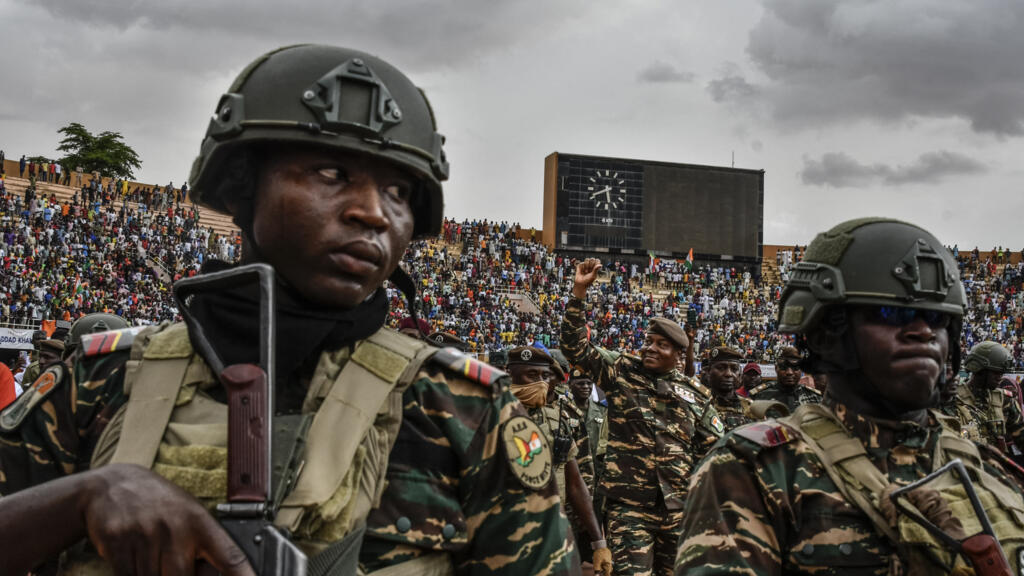
The current crisis ignited on January 29, 2026, when gunfire and explosions rocked Niamey International Airport, killing at least five and wounding dozens. Niger's military junta swiftly accused France, Benin, and Côte d'Ivoire of orchestrating the attack, claiming it was a bid to destabilize the regime. This comes amid a cascade of violence: a January 5 raid in northern Nigeria killed 30, an ISWAP (Islamic State West Africa Province) assault on Monguno in Borno State on January 12, and whispers of a coup plot trial against Nigerian officers on January 27. These events underscore Niger's vulnerability as a jihadist staging ground, with groups like JNIM (Jama'at Nasr al-Islam wal-Muslimin) and ISWAP exploiting porous borders.
Accusations and Regional Tensions
On January 30, Niger's Foreign Ministry issued a blistering statement, alleging France provided logistical support, Benin hosted attackers, and Côte d'Ivoire facilitated arms smuggling for the airport strike. "This is hybrid warfare by former colonial powers and puppets," junta spokesman Col. Amadou Abdraman declared, per RFI reporting. Evidence cited includes intercepted communications and drone footage, though unverified independently.
These claims ripple across West Africa. Benin, already feuding with Niger over border closures since 2023, faces accusations of sheltering anti-junta exiles. Côte d'Ivoire, a stable ECOWAS bastion, denies involvement but has bolstered border patrols. France, ejected from Niger in 2023, calls the charges "absurd propaganda," linking them to Niamey's pivot to Wagner-linked mercenaries (now Africa Corps). Diplomatic fallout is immediate: ECOWAS threatens sanctions, while Algeria mediates.
Implications for regional security are dire. The Sahel's Alliance of Sahel States (AES)—Niger, Mali, Burkina Faso—views this as an existential threat, potentially justifying preemptive strikes. Cross-border militancy surges: ISWAP's Monguno attack spilled into Nigerien territory, per @SahelSecurity threads analyzing attack patterns. This erodes fragile diplomacy, risking a proxy war amid ECOWAS fragmentation post-Niger sanctions lift in 2025.
Historical Context: Patterns of Violence
Niger's turmoil echoes a decade of cyclical instability, drawing direct parallels to the provided timeline:
- January 5, 2026: Gunmen raid in northern Nigeria kills 30, attributed to Boko Haram splinters, signaling spillover into Niger's Tillabéri region.
- January 12, 2026: ISWAP attack in Monguno, Borno State, Nigeria—over 50 dead—highlights jihadist resurgence, with fighters retreating toward Niger borders.
- January 27, 2026: Nigerian military officers face coup plot trial, exposing intra-army fractures that mirror Niger's 2023 putsch.
- January 29, 2026: Gunfire and explosions near Niamey Airport—eyewitness @NiameyWatch posted videos of tracer fire and military convoys.
- January 30, 2026: Food insecurity crisis peaks, per UN reports.
This timeline reveals evolution: Post-2015, Boko Haram fragmented into ISWAP, expanding westward. Niger's 2023 coup disrupted counterterrorism, allowing JNIM to seize swathes of Tillabéri. Recent accusations parallel 2024 Benin-Niger clashes and Mali's 2022 claims against France. Militant activity has shifted from desert camps to urban targets like airports, per patterns analyzed in @SahelSecurity posts, indicating sophisticated external backing.
The Humanitarian Crisis: Food Insecurity and Its Impact
As violence escalates, Niger confronts a January 2026 food insecurity crisis affecting 4.6 million people—over 40% of the 27 million population—per UN_Niger updates. Acute malnutrition stalks 1.3 million children, with Tillabéri and Maradi hardest hit. Conflict disrupts aid: Airport attacks halt flights, while border closures block imports from Nigeria and Benin.
Ongoing clashes exacerbate this. Jihadist control of farmland in Diffa and Tahoua displaces 400,000, per UNHCR. Climate shocks—2025's floods and droughts—shriveled harvests by 30%, spiking millet prices 150%. Displaced families forage in bandit zones, risking recruitment. Eyewitnesses report looting of World Food Programme convoys, mirroring 2024 Sahel famines. Without access, mortality could double by March, analysts warn.
Looking Ahead: Predicting the Future of Niger and the Sahel
Three scenarios emerge from current tensions:
-
Escalation and Isolation: AES retaliation against Benin/Côte d'Ivoire sparks border war, isolating Niger economically. Humanitarian aid stalls, pushing famine thresholds by Q2 2026. Russia bolsters junta with arms, prolonging stalemate.
-
International Intervention: ECOWAS or AU deploys peacekeepers, echoing MINUSMA in Mali. France-EU resumes covert ops; UN ramps aid via Algeria. Success hinges on junta concessions, unlikely amid accusations.
-
Containment with Mediation: Algeria/Qatar broker talks, freezing borders. Aid corridors open, averting crisis—but jihadists exploit vacuums, per historical patterns.
Lack of intervention favors escalation: Sahel violence displaced 3.5 million in 2025; projections hit 5 million by year-end if unchecked.
Analysis: The Intersection of Conflict and Humanitarian Needs
Accusations intersect with humanitarian imperatives, potentially dictating outcomes. Violence blocks 70% of aid routes, per WFP, forcing political calculus: Junta hardens for survival, risking mass starvation that could topple it via unrest. Conversely, aid dependency—Niger receives $2B annually—offers leverage for diplomacy.
Resolution paths exist: Track-two talks via AES could delink security from accusations, prioritizing food corridors. Yet escalation looms if France retaliates economically (uranium bans). Humanitarian needs may catalyze intervention: EU's 2026 Sahel package ($1B) ties aid to stability. Unique to this crisis, airport strikes signal urban vulnerability, pressuring global powers—US AFRICOM watches closely amid counter-ISIS ops.
Broader Sahel instability amplifies fallout: Nigerian coups echo southward, fragmenting ECOWAS. Without unified response, jihadists thrive, exporting terror to coastal states like Benin. Predictive trajectory favors increased involvement—UN Security Council meets February 5—or Niger's isolation, with 1 million famine deaths possible by 2027.
The World Now will monitor Niamey Airport security, ECOWAS statements, and aid convoy reports. Regional dominoes teeter; humanitarian collapse could redefine Sahel geopolitics.
*(Word count: 1,512)