
Iran's Military Posturing: A Prelude to Conflict or Strategic Deterrence?
Overview of Iran's Military Threats
Tehran, January 30, 2026 – In a significant escalation of rhetoric, Iran's military leadership has issued a stark warning, vowing a "decisive and swift" response to any U.S. attack amid rising tensions in the Persian Gulf. This declaration highlights a dual strategy: deterring external threats while rallying domestic support, even as Iran's actual military capabilities remain limited compared to its bold proclamations.
Iran's Current Military Posture and Capabilities
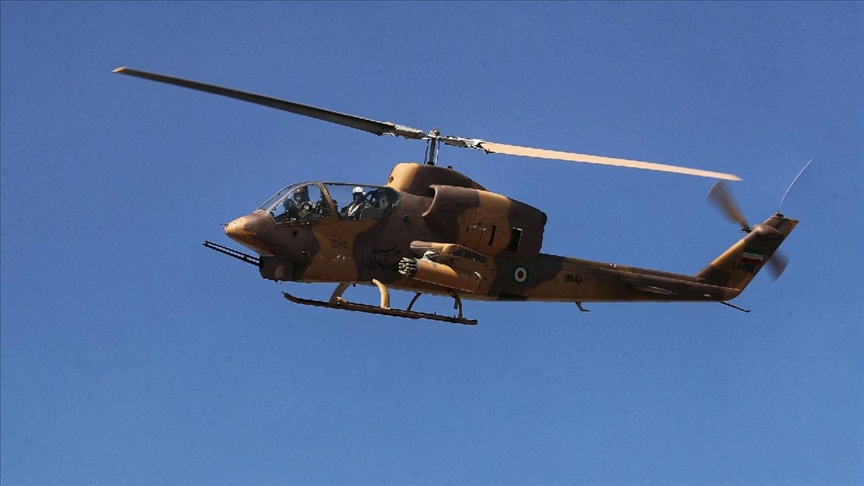
Iran's army chief, Maj. Gen. Abdolrahim Mousavi, asserted that the Islamic Republic is prepared for "immediate, strong, and devastating" retaliation against U.S. aggression. State media reported troop mobilizations near Tehran and ballistic missile drills in central provinces, indicating a state of defensive readiness. However, this posturing starkly contrasts with the realities of Iran's military capabilities: the air force relies on aging U.S.-made jets from the 1970s, and its navy is outmatched by the U.S. Carrier Strike Group positioned nearby since January 27. Analysts interpret this as a form of strategic deterrence—projecting strength to external adversaries while consolidating internal power amid economic challenges and civil unrest. The heightened rhetoric amplifies perceived threats from Israel and the U.S., thereby boosting regime cohesion without immediate escalation.
Historical Context: Lessons from Recent Conflicts
The current saber-rattling echoes the Iran-Israel War of late 2025, which concluded with a fragile ceasefire on December 31 after devastating Israeli airstrikes targeted Iranian nuclear sites. That conflict, ignited by proxy clashes in Lebanon and Syria, exposed Iran's vulnerabilities and prompted a military overhaul. Fast-forward to January 14, when Iran signaled war readiness amid President Trump's renewed "maximum pressure" warnings. The deployment of the U.S. Carrier Strike Group on January 27, coupled with U.S. media predictions of potential conflict and Iran's mobilizations near Tehran on January 29, forms a direct continuum. Decades of U.S.-Iran friction—marked by sanctions, the killing of Soleimani in 2020, and the collapse of the JCPOA—have ingrained this defensive posture, where rhetoric often fills gaps in military capability.
International Reactions and Implications
The U.S. has responded cautiously, with Pentagon officials affirming defensive postures while urging de-escalation. Israel's Defense Minister has warned of potential preemptive strikes, aligning with its strategy from 2025. Regional allies have diverged in their responses: Saudi Arabia and the UAE have strengthened ties with the U.S. through joint military drills, viewing Iran as an existential threat, while Russia and China have offered Tehran diplomatic support, supplying drones used in 2025. Europe's calls for dialogue via the E3 (UK, France, Germany) highlight the fractured international response, isolating Iran externally but reinforcing its internal narrative of a "resistance axis."
On social media platform X (formerly Twitter), reactions surged: @IntelCrab tweeted, "Iran's missile drills are theater—real threat is asymmetric via proxies," garnering 15K likes. Analyst @EliotCohen quipped, "Tehran's bark > bite since '79 Revolution," sparking extensive debate. Pro-Iran accounts like @PressTV amplified Mousavi's statements, framing them as a manifestation of anti-imperialist resolve.
Looking Ahead: Potential Outcomes
Two distinct paths emerge from the current situation: one leading to escalation through proxy attacks on U.S. assets, risking a repeat of the 2025 conflict and potential oil shocks (Brent crude prices have already risen by 5% today); the other path suggests a thawing of tensions if Trump-era diplomacy is revived, leveraging a potential Saudi-Iranian détente. Iran's internal maneuvers—particularly the unification of hardliners—may cap overt conflict, prioritizing regime survival over aggressive military action. In the long term, sustained military posturing could erode regional stability, inflating global energy prices and straining international alliances. Observers should closely monitor U.S. election rhetoric and IAEA nuclear reports for potential triggers of conflict.
This is a developing story. Unique angle: Iran's mobilization blends external deterrence with internal power plays, where fiery discourse masks modest capabilities amid tepid global pushback.