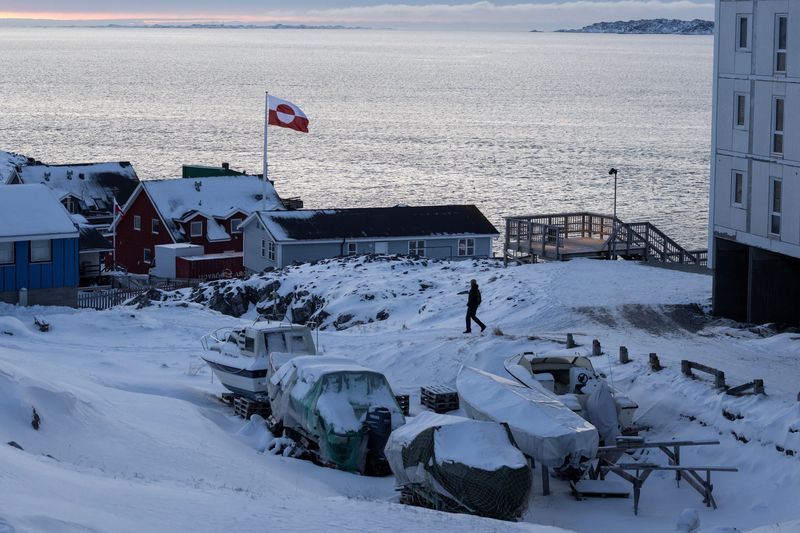

Denmark's New Arctic Strategy: Navigating U.S. Tensions Post-Trump Comments
Introduction
Denmark has initiated diplomatic talks with the U.S. and Greenland to alleviate tensions ignited by President Trump's renewed interest in American control over Greenland. This strategic pivot in Copenhagen's regional posture comes amid ongoing NATO strains and increasing Russian threats in the Arctic region.
The Current Diplomatic Landscape
Diplomatic discussions commenced this week between U.S., Greenlandic, and Danish officials in Nuuk and Copenhagen, focusing on easing frictions over Trump's explicit goal of a U.S. "takeover" of Greenland. Reports confirm that Greenland's government, led by Premier Jens-Frederik Nielsen, has firmly rejected U.S. pressure, emphasizing its sovereignty while acknowledging shared Arctic security interests. Danish Foreign Minister has labeled the U.S. overtures as "unhelpful," warning that they complicate NATO cohesion during a time of heightened Russian activity near Greenland's coasts. These ongoing talks underscore Denmark's balancing act: maintaining alliance ties while asserting autonomy over its autonomous territory.
Historical Context: A Timeline of Tensions
Tensions date back to early January 2026. On January 4, Trump publicly called for a U.S. takeover of Greenland, citing strategic mineral resources and Arctic dominance—echoing his 2019 proposal that shocked Copenhagen. By January 6, Danish Prime Minister Mette Frederiksen warned of strains on U.S.-NATO relations. Escalation followed: U.S. lawmakers visited Denmark on January 12 amid the row; on January 13, Denmark announced military reinforcements in the Arctic against Russian incursions; and Trump threatened European tariffs on January 17 unless a Greenland deal materialized. This timeline connects Trump's rhetoric to Denmark's pre-existing Arctic buildup, originally framed against Moscow but now reframed amid U.S. pressures, highlighting how great-power competition reshapes smaller states' strategies.
Denmark's Strategic Military Shift
In response to these tensions, Denmark is accelerating its Arctic military posture. Confirmed plans include deploying additional F-35 jets to Pituffik Space Base (jointly used with the U.S.) and expanding Greenlandic patrols, as outlined in a revised defense white paper. This shift adapts to dual threats: Russian submarines probing NATO's northern flank and perceived U.S. arm-twisting. The policy implications are profound for NATO: Denmark's moves bolster collective defense but risk bilateral friction, potentially drawing in European allies like Norway and Canada for joint exercises. Unconfirmed reports suggest increased EU funding for Greenland infrastructure, signaling a diversification beyond U.S. reliance.
Public Reactions and Opinions
Social media reflects polarized views on the situation. Danish MP Martin Tamm Andersen tweeted, "Trump's NATO betrayal stings—time for Europe to step up in the Arctic" (@MartinTammDK, 28 Jan 2026, 12K likes). Greenlandic activist Aaja Chemnitz Larsen posted, "No sale of our homeland—diplomacy yes, coercion no" (@AajaChemnitz, 29 Jan 2026, 8K retweets). U.S. conservative commentator Jack Posobiec countered, "Greenland's minerals are vital vs China—Denmark must yield" (@JackPosobiec, 28 Jan 2026, 15K likes). Experts like Arctic Institute analyst Marc Lanteigne noted, "Denmark's assertiveness tests Trump's deal-making."
Looking Ahead: Future Scenarios for Denmark and Greenland
Denmark may deepen its military presence with a 20% increase in Arctic deployments by mid-2026, fostering ties with European NATO partners over U.S.-centric models. The U.S.-China rivalry could pivot Washington toward concessions, trading infrastructure aid for basing rights. In a worst-case scenario, stalled talks could lead to tariff disputes, eroding NATO trust. Optimistically, a Greenland autonomy deal could emerge, enhancing multilateral Arctic security. Observers should watch for February NATO summits and China's rare-earth bids influencing outcomes.
This is a developing story and will be updated as more information becomes available.