
Bannu Operation: A Turning Point in Pakistan's Ongoing War Against Terrorism
Operation Details
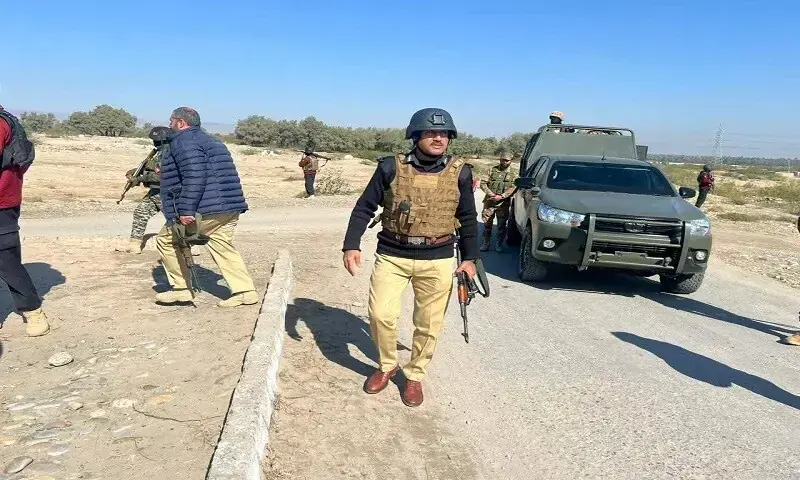
Confirmed reports from Pakistan's Inter-Services Public Relations (ISPR) detail a high-stakes operation in Bannu, Khyber Pakhtunkhwa province, where security forces engaged a group of militants in an intense firefight. Five terrorists were neutralized, and a significant cache of weapons and explosives was recovered from the site. Authorities described the operation as a "large-scale" effort based on credible intelligence, targeting hideouts linked to resurgent networks. No casualties among security personnel were reported. ISPR statements emphasized the operation's success in disrupting planned attacks, calling it a "significant blow" to terrorist infrastructure in the region. Unconfirmed details suggest the militants were affiliated with banned outfits operating from Afghanistan border areas, though official confirmation is pending.
Context & Background
This Bannu clash fits into a rapid timeline of escalating threats in early 2026, underscoring the cyclical nature of terrorism in Pakistan. On January 5, authorities seized a large cache of explosives in Karachi, averting urban attacks. On January 14, a leader of LeT publicly threatened jihad over Kashmir, amplifying cross-border tensions. By January 20, the Counter Terrorism Department (CTD) successfully foiled a suicide bombing plot in Mastung, Balochistan. The Bannu operation on January 27 marks the fourth major incident in just three weeks.
Historically, Pakistan has faced waves of terrorism since the post-9/11 era, peaking during the 2008-2014 Taliban insurgency with operations like Zarb-e-Azb (2014) that cleared North Waziristan but failed to eradicate the roots of militancy. Past responses—mixing military raids, drone strikes, and the National Action Plan (2014)—initially reduced attacks by 70% but allowed for a resurgence via splinter groups and Afghan safe havens. Recent events echo the spikes seen in 2022-2023, when Tehrik-i-Taliban Pakistan (TTP) attacks doubled, prompting renewed kinetic actions.
Why This Matters
The Bannu operation represents a unique pivot: from reactive foils to proactive, large-scale clearances amid the revival of LeT and TTP. Unlike isolated arrests, the scale of this operation suggests evolving tactics—better human intelligence and real-time surveillance—potentially addressing past failures such as porous borders. For stakeholders, this operation is crucial as civilian casualties from recent plots (e.g., Mastung) fuel public outrage, putting pressure on the government ahead of upcoming elections. Economically, sustained militancy deters investment in Khyber Pakhtunkhwa; strategically, it tests Pakistan's post-Taliban Afghanistan policy. If this operation signals a broader offensive, it could reclaim momentum lost since the 2021 Afghan withdrawal, but risks retaliation or civilian backlash if not paired with deradicalization efforts.
Public Reactions
Social media erupted with reactions following the operation. On X (formerly Twitter), @Dawn_News tweeted: "Five terrorists killed in Bannu op—ISPR hails intelligence success amid rising threats." Defense analyst @ImtiazGul commented: "Bannu shows Pak forces adapting; echoes Zarb-e-Azb but needs sustained ops. #PakistanSecurity." Public sentiment was mixed between optimism and caution: @PakDefenceForum posted, "Turning the tide! Five down in Bannu—more to come? #WarOnTerror," garnering 5K likes, while @HRCP87 warned: "Ops vital but protect civilians in tribal areas." PM Shehbaz Sharif's office stated: "Salute to forces for neutralizing terrorists—commitment to zero tolerance unwavering."
Looking Ahead
Expect intensified operations in border regions, with predictions of 2-3 more raids in February targeting LeT and TTP logistics. Watch for potential boosts in U.S./China intelligence-sharing, as hinted in recent Quad talks. A strategic shift to "hot pursuit" across the Durand Line is plausible but carries risks. Domestically, monitor announcements from the National Counter Terrorism Authority for potential policy upgrades. Escalation could spike attacks in the short term; success will hinge on diplomatic pressure on Afghanistan.
This is a developing story and will be updated as more information becomes available.