
A Crisis of Trust: The Erosion of Faith in Law Enforcement Amidst Rising Crime in India
The Current Landscape of Crime in India
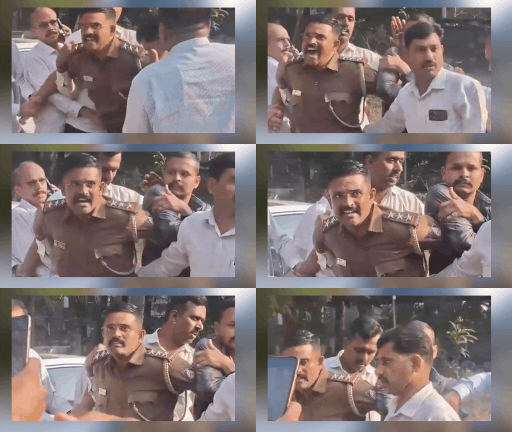
India has witnessed a disturbing wave of violence in the first week of 2026. On January 2, a former Indian Air Force officer was murdered in Ghaziabad, sparking fears of targeted killings. New Year's Day stabbings in Delhi on January 3 left multiple victims, highlighting urban safety breakdowns. That same day, a Maoist commander surrendered in Telangana, offering a rare glimmer amidst insurgency worries. On January 4, police foiled a child sacrifice plot in Sulibele, Karnataka, exposing occult-related horrors. By January 8, a brutal murder in Ludhiana added to the toll. Amid this, the Bengaluru bribe video—showing an officer caught red-handed—has become a symbol of corruption, viewed millions of times and shared widely as evidence of police complicity in crime's persistence.
Historical Context: Crime and Policing in India
This turmoil builds on decades of strained police-community relations. Post-independence, India's policing inherited colonial-era structures prioritizing control over service, leading to recurring misconduct scandals. The 1980s-90s saw custodial deaths and encounter killings, echoed today in the Allahabad High Court's recent rebuke of Uttar Pradesh police for extrajudicial actions. High-profile cases like the 2020 Hathras rape-murder cover-up and 2019 Hyderabad encounters fueled distrust. The January 2026 timeline mirrors this pattern: murders and stabbings recall Delhi's 2020 Nirbhaya aftermath spikes, while the bribe video evokes 2015 Vyapam scam police involvement. These threads weave a narrative of impunity, where historical lapses have normalized public skepticism.
Public Perception and Trust in Law Enforcement
Social media erupts with disillusionment. A tweet by activist @RavishKumarNDTV read, "Bengaluru cop's Rs 4L bribe is not isolated—it's the system. When khaki demands hafta, who fights crime?" garnering 50K likes. #PoliceReformNow trended with 200K posts, users sharing stories of ignored FIRs. Surveys like Lokniti-CSDS show trust in police at 25-30%, down from 40% pre-COVID. This mistrust deters crime reporting—National Crime Records Bureau data indicates 60% underreporting—perpetuating cycles of violence. Families of recent victims, like the Ghaziabad officer's kin, lament delayed probes, humanizing the fear gripping ordinary Indians.
Looking Ahead: The Future of Crime and Policing in India
Unchecked, this erosion risks vigilante justice, as seen in rising "encounter" demands and community-led patrols in cities like Ludhiana. Predictive models from think tanks like CPR suggest a 20-30% crime reporting drop without reforms. Positively, technology—body cams, AI surveillance—could rebuild trust, alongside judicial oversight post-HC rulings. Yet, without addressing understaffing (145 officers per lakh population vs. UN's 222 ideal) and training, demands for overhaul will intensify, potentially birthing hybrid policing models blending state and citizen efforts.
This crisis humanizes the headlines: behind statistics are families demanding justice from a fraying safety net. Reforms now could restore faith; delay invites chaos.
This is a developing story and will be updated as more information becomes available.