
Ukrainian Drones Reduce Russian Truck Traffic to Crimea by 71 Percent
Ukrainian drone strikes have severely disrupted Russian military logistics to occupied Crimea in the conflict, reducing truck traffic on a key highway by 71 percent and forcing repeated closures of the Chongar bridge. A Ukrainian commander reported that Russians banned military materiel transport on the R-280 road linking Russia to Crimea via occupied southern Ukraine cities, with daily vehicles dropping from 11,000 to 6,500 and trucks from 3,800 to 1,100. [1]
Drone Campaign Disrupts Key Supply Routes
Ukrainian forces struck the Chongar bridge for the second time in three days, closing traffic and requiring drivers to take two-hour detours via Armyansk and Perekop. [1] A Ukrainian commander wrote that Russians have banned the transport of military materiel on a key road to Crimea. [1] The R-280 road leads from the Russian city of Rostov-on-Don through the occupied cities of Mariupol, Berdiansk, and Melitopol to Crimea. [1] According to the commander of Ukraine's Unmanned Systems Forces, military cargo traffic along the Russian-controlled R-280 highway has fallen by 71 percent over the past period, with the number of trucks using the road reduced thanks to the drone campaign. [1] While normally 11,000 vehicles passed along it every day, including 3,800 trucks, at the beginning of June it was 6,500 vehicles and 1,100 trucks. [1] The command of the Eastern grouping also banned military transport on the Crimean highway A-291, which leads from the city of Kerch to Sevastopol. [1] The order stated that transport of materiel to support military units and groupings is carried out on available backup routes, bypass roads and alternative routes. [1] Russian blogger Archangel Spetsnaza confirmed that logistics throughout Novorossiya had been halted. [1]
Repeated Attacks on Chongar Bridge
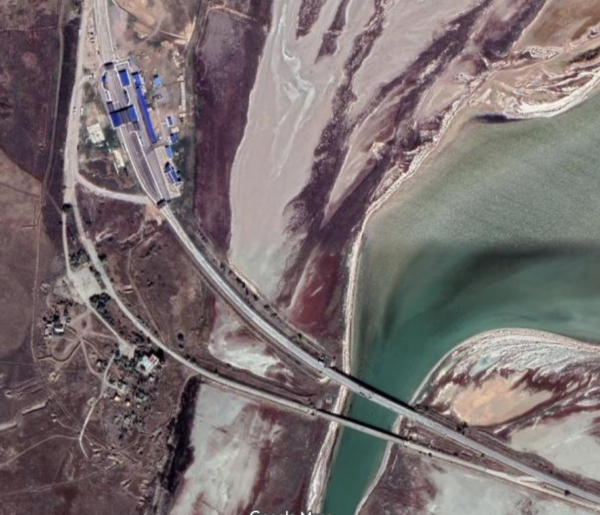
On Tuesday morning, Ukrainians once again successfully attacked the Chongar bridge, one of the three traditional road connections with occupied southern Ukraine. [1] The attack was reported by the Russian-appointed governor of the occupied Kherson region, Vladimir Saldo, who wrote that the Chongar bridge was again damaged after a night-time attack by a Ukrainian drone and that traffic across the bridge has again been closed. [1] He added that mobile teams and air defence forces had shot down 20 Ukrainian drones that were approaching the bridge. [1] Ukrainians had also hit the Chongar bridge two days earlier, striking it at least three times according to published footage. [1] They used FP-2 drones and the new Behemoth drone. [1] Traffic on the bridge was resumed again on Monday afternoon, but it did not last long. [1] The Russian account Two Majors wrote that Ukraine was attempting a military operation to blockade the peninsula. [1]
Ukrainian Technological Advances in Drone Warfare
Ukraine is using AI-equipped interceptor drones with 95 percent autonomy and new long-range Behemoth drones carrying 75 kg of explosives. [1] Ukrainians are beginning to use AI in interceptor drones to 95 percent, with the operator only clicking on the target. [1] They used FP-2 drones and the new Behemoth drone, a counterpart to the Shahed, which can carry 75 kg of explosives and has a range of 300 kilometres. [1] Ukraine is serious about the blockade of Crimea and restricting transport in the occupied south of Ukraine, and it is succeeding through these drone capabilities. [1]
Assessments of Military and Humanitarian Impact
Russian forces have begun using civilian vehicles to transport fuel to the front due to the disruptions. [1] A Russian independent think-tank assessed that the land corridor to Crimea might not be fully usable by mid-summer, though it would likely not collapse the front line. [1] The Russian independent think-tank Conflict Intelligence Team wrote in its regular report that it did not rule out that by mid-summer the land corridor to Crimea might not be fully usable. [1] According to the think-tank, the Russians could transport humanitarian supplies by Il-76 or An-124 transport aircraft, for example to the airport in Simferopol. [1] Analysts from the think-tank do not believe that cutting off Crimea would be so significant from a military point of view, except if the Russians were preparing a major offensive in the Orikhiv sector in Zaporizhzhia region. [1] The effort to cut off Crimea and the attacks on roads leading to the peninsula have rationale in complicating logistics, though it is unlikely that such attacks would lead to a collapse of the front line. [1]
Geography and Logistics Challenges for Crimea
Crimea is a peninsula, but it can be turned into an island through sustained pressure on its connections. [1] The land connection with southern Ukraine runs across the 9 km-wide Perekop isthmus in the west. [1] Most of the territory in the north consists of shallow salt marshes, which are separated from the Sea of Azov in the east by the Arabat Spit, a narrow strip of land stretching for 120 km. [1] Two roads run via Armyansk and Perekop respectively across the Perekop isthmus. [1] In the east, there is the connection via the Chongar bridge, which is essentially two bridges. [1] The last road connection is the bridge from the town of Henichesk to the Arabat Spit, a route that is more for adventurers than for regular driving since it is a dirt road with only occasional asphalt sections. [1] Two railway lines also lead to the peninsula, the eastern one via the Syvash railway bridge. [1] After an attack on a train, one branch had been closed. [1] The peninsula is connected to Russia by the Crimean bridge, but transporting fuel across it is prohibited since a potential attack could significantly damage the structure. [1] For drivers, repeated strikes mean they have to take at least a two-hour detour through the northwestern part of Crimea. [1] The Chongar bridge is the main route that connects the occupied Russian-held part of Ukraine with Crimea. [1]
What to watch next: The Russian independent think-tank Conflict Intelligence Team continues to monitor whether the land corridor to Crimea remains fully usable by mid-summer, with potential shifts toward air transport of supplies if road routes face further restrictions. [1]